
Last updated November 15, 2026
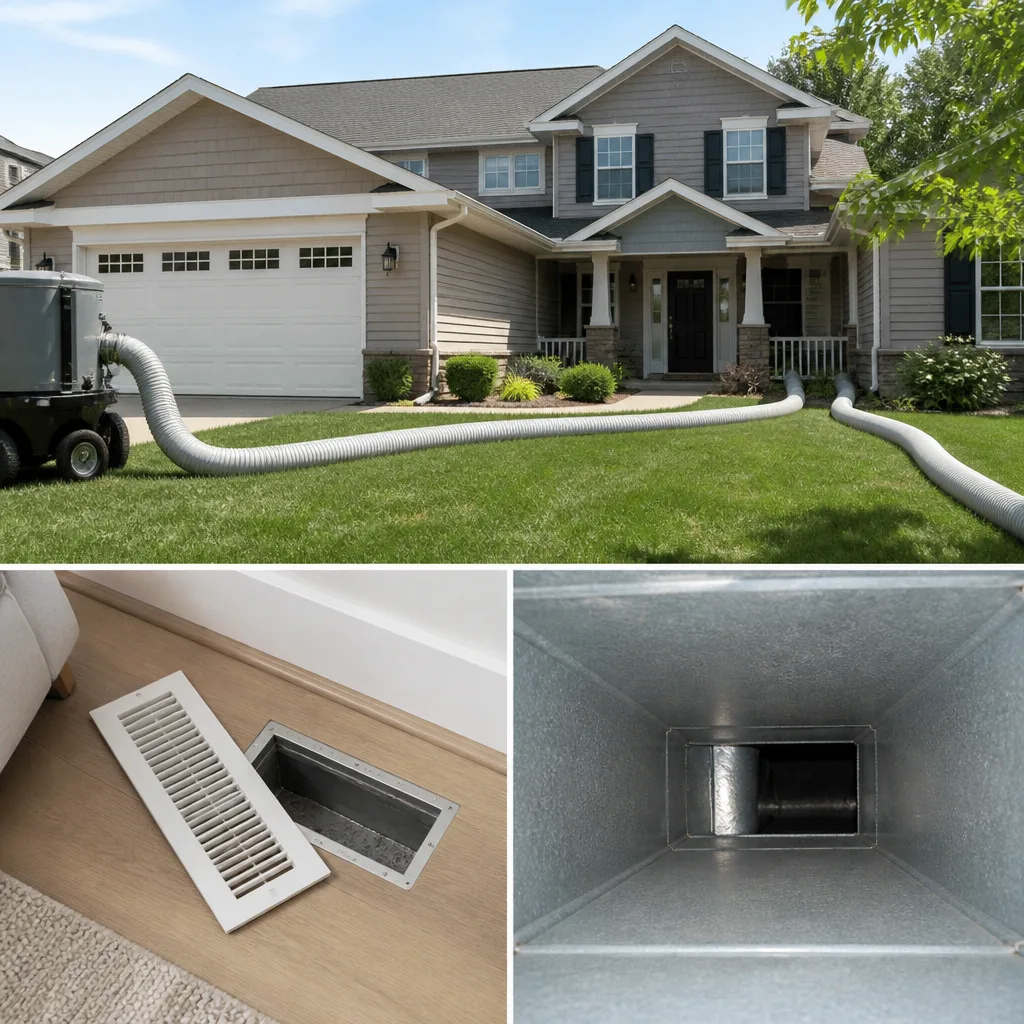 Whole-home duct cleaning
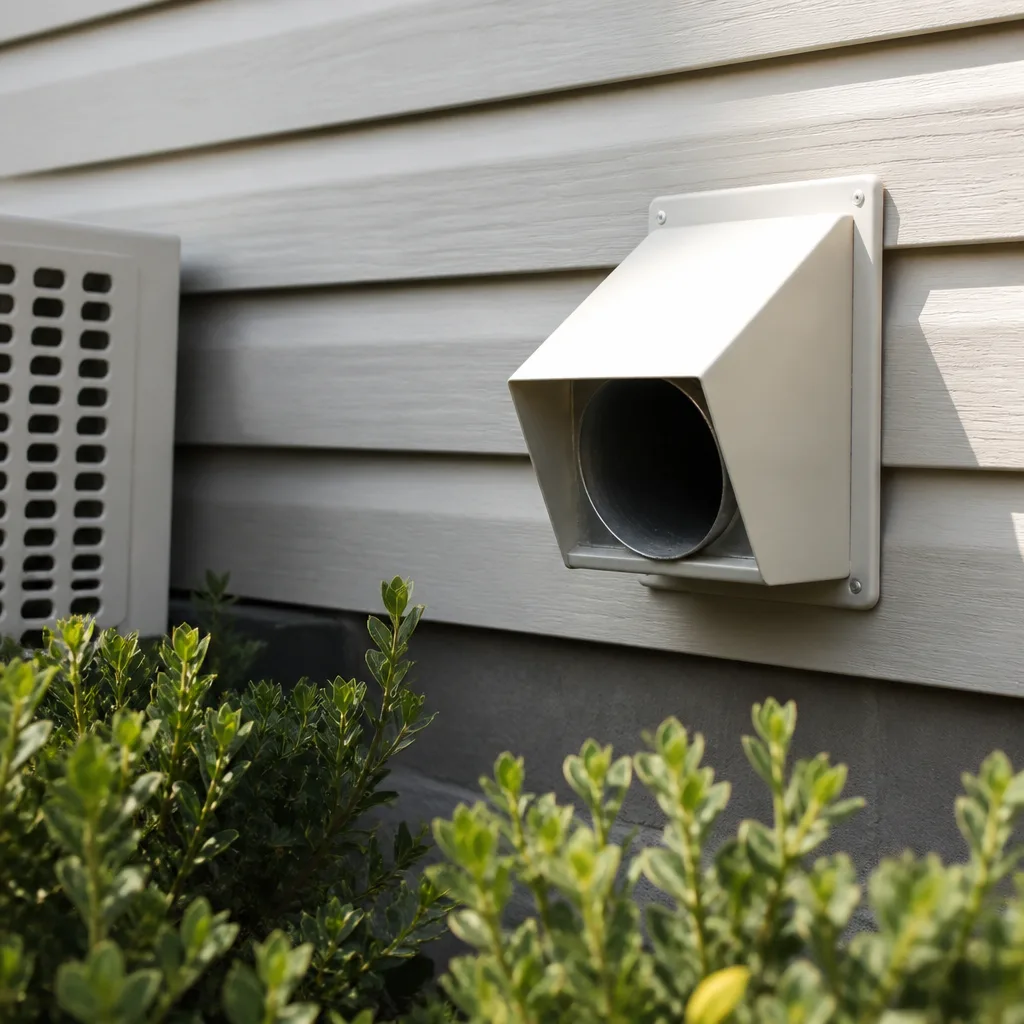 Dryer vent cleaning
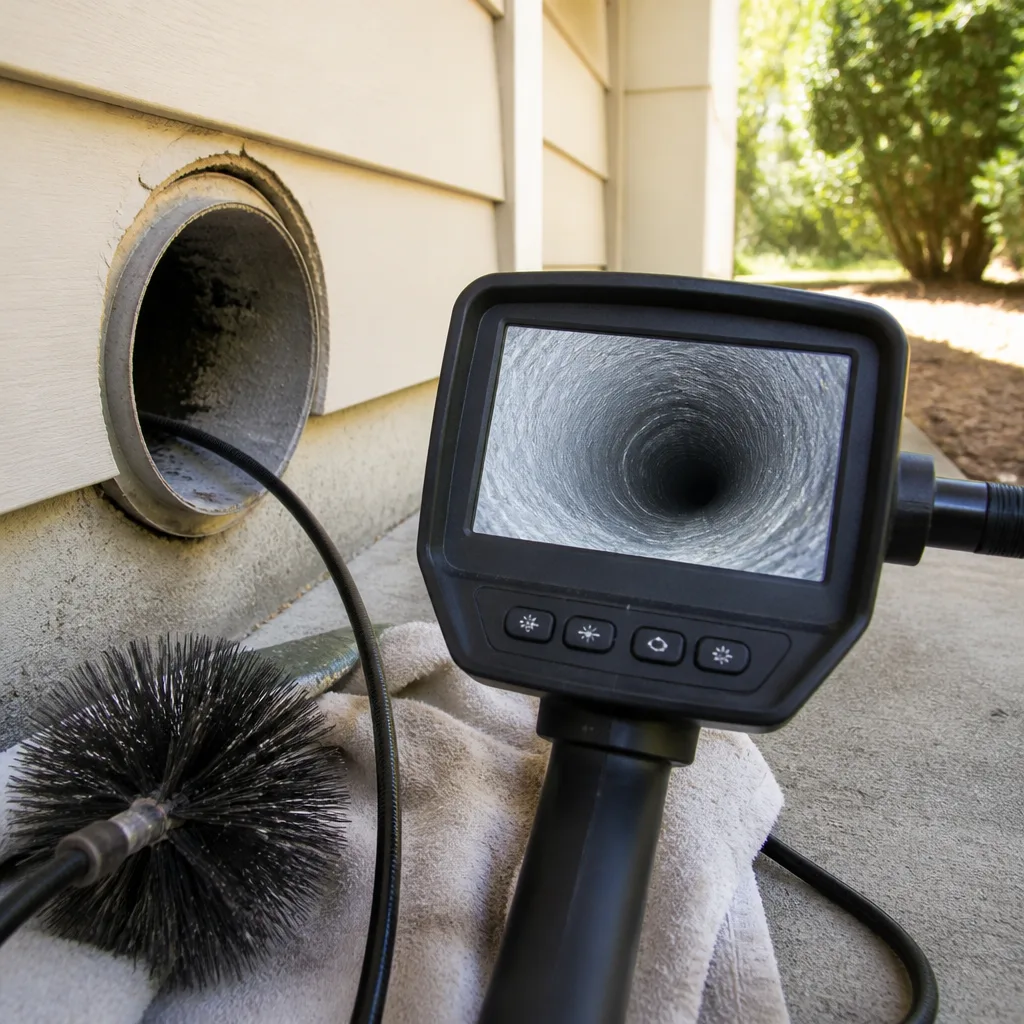 Camera inspection
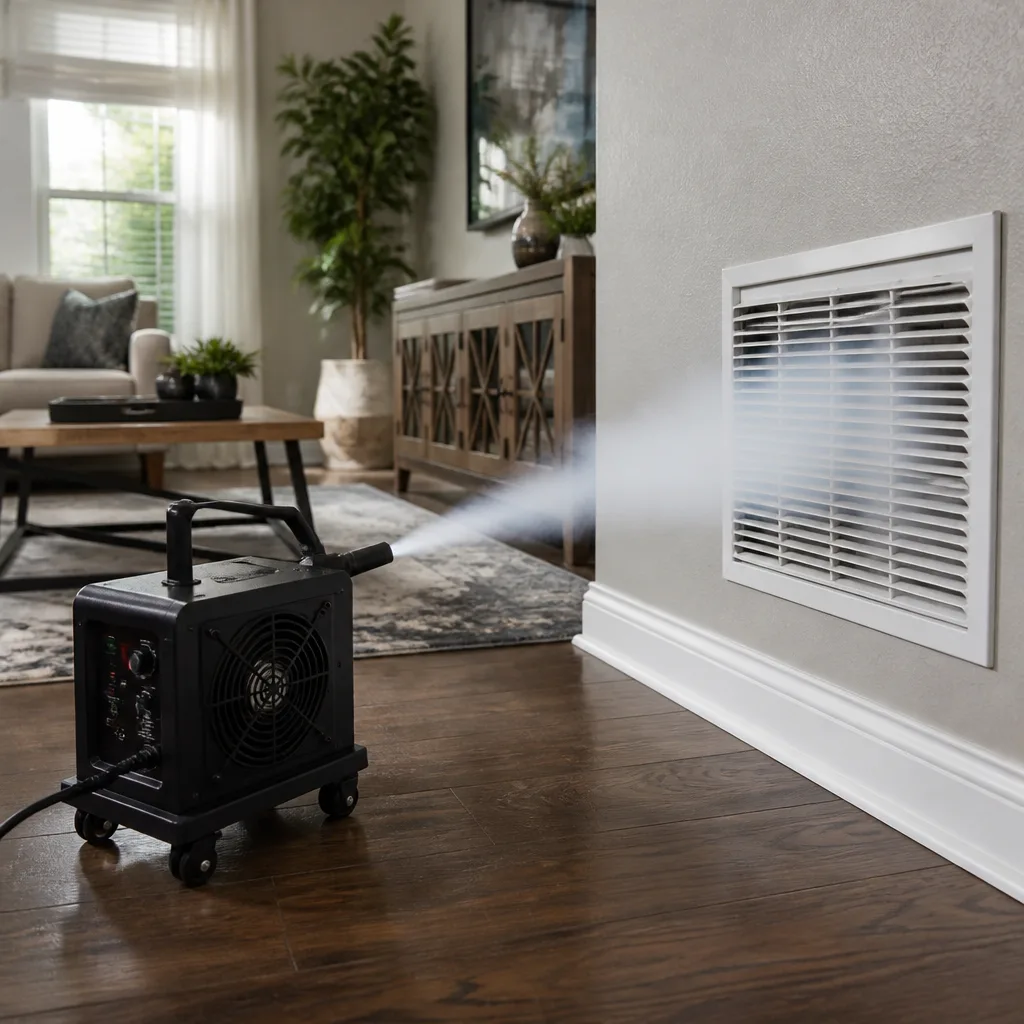 Sanitizing & deodorizing
Whole-system duct and dryer vent check with before-and-after photos - you see exactly what came out of your vents
That "$99 whole-house special" is a bait ad - the real number appears once they are in your hallway, or the "clean" is a shop-vac at the register. We photograph the inside of your ducts before and after instead.
Air Duct Cleaning Emergency Preparedness Guide for Colorado Springs Homes
Most homeowners think about ducts only when something smells wrong. The harder truth is that in Colorado Springs, the duct system is the fastest path for an outdoor air quality emergency to become an indoor one. During the Waldo Canyon and Marshall Fire evacuations, thousands of homes that took no structural damage came back to HVAC systems that had been pulling smoke into the ducts while air quality outside was at hazardous levels. Few of those homeowners knew what to do first. This guide gives you a written protocol you can follow before, during, and after a smoke event, plus the inspection and documentation steps that protect both your air and your insurance claim.
Quick Answer
When wildfire smoke or a wind-driven dust event hits Colorado Springs, your first move is to stop the HVAC system from circulating outdoor air: switch the thermostat to fan “off,” close the fresh-air intake and any outside dampers, and keep windows and doors shut. After the event, have the duct system inspected before you run the system normally again, replace filters, and document everything with photos and dates for your insurer. Duct cleaning and repair remove what infiltrated; sealing and air-handler integrity keep it from happening next time.
Styles & brands we work with
- Whole-home duct cleaning
- Dryer vent cleaning
- Camera inspection
- Sanitizing & deodorizing
Table of Contents
- The Shut-Down Protocol: Before Smoke Enters Your Ducts
- The First 48 Hours After You Return Home
- Cleaning vs. Remediation: Which Does Your Home Need?
- Duct Sealing and Air Handler Integrity: Stopping the Next Infiltration
- What a Post-Event Duct Inspection Should Include
- Documenting Smoke Damage for Your Insurance Claim
- The Other Duct Emergency: Your Dryer Vent
- Colorado Springs Seasonal Calendar for Duct Preparedness
The Shut-Down Protocol: Before Smoke Enters Your Ducts
The minutes matter here, not the hours. A forced-air system running on “auto” or “on” keeps pulling air through the return, and during a smoke event that air is coming from outside. Shutting circulation down is the single highest-value step a Colorado Springs homeowner can take, and it costs nothing.
Work through this in order. Keep the printed list somewhere you can find it without power or internet.
- Switch the thermostat to “off” or fan “off.” Not “auto,” not “circulate.” Off. If you have a programmable thermostat with a fan schedule, clear it.
- Close the fresh-air intake. Many Colorado Springs homes have a dedicated outdoor air intake or an economizer damper tied to the furnace or air handler. Shut the manual damper if there is one.
- Close all windows and exterior doors. Seal gaps under doors with a rolled towel if smoke is visibly entering.
- Cover returns and registers in the rooms you’re sheltering in with painter’s tape and plastic only if smoke is actively coming through them. Otherwise leave them be; over-sealing can stress the system later.
- Run a portable HEPA air cleaner in your main living room if you have one. This works on the room, not the ducts, and it’s the right tool during the event.
- Do not run the clothes dryer. A dryer vent is a direct outdoor opening, and running it pulls outside air into the house.
- Write down the date and time you shut the system down. You’ll need it for the claim.
The mistake we see most often is leaving the fan on “circulate” to “keep air moving.” During a smoke event, that’s the opposite of what you want: it’s feeding the contamination into every room through the ductwork. If you take one thing from this guide, take this: stop the circulation first. The full scope of what air duct cleaning addresses starts with preventing what’s inside from getting worse.
The First 48 Hours After You Return Home
The first two days after a smoke-zone evacuation are when you set the course for the next year of indoor air quality. Most homeowners walk in, smell smoke, and immediately crank the system to “clear the air.” That pushes contaminants deeper into the duct system and the air handler. Here’s a better order of operations.
Before you do anything else, walk the house and photograph it. Ceiling, registers, return grilles, window sills, and the air handler closet. Smoke residue on a return grille is documentation of infiltration, and adjusters want photos taken before cleaning starts.
Then work through the inspection priority list below. Ductwork is not uniform; some sections hold contamination far longer than others.
- Return air plenum and main return trunk. Highest priority. This is where the largest volume of smoky air entered, and where soot and fine particles settle first.
- The air handler cabinet and blower compartment. Second priority. The blower wheel acts like a fan blade and collects sticky smoke residue, and that residue keeps releasing odor every time the system runs.
- Filter slot and filter media. Third priority. Replace the filter, don’t clean it. A filter loaded with smoke particles is a source, not a barrier.
- Supply trunk and branch takeoffs. Fourth priority. Smoke that made it past the return will be lighter here, but odors persist in flex duct with a porous inner liner.
- Registers and grilles throughout the house. Fifth priority. These are the easiest to remove and clean, and the easiest to skip.
If your home has flex duct with a torn inner liner, or a return plenum with visible gaps, smoke doesn’t just pass through; it deposits. That’s the point where cleaning alone stops being enough and repair becomes the real fix. In our experience, a home that was inside the smoke zone for more than a day usually needs more than a filter swap and a vacuum. It needs a real inspection with a camera or a mirror at the plenum, and a technician who can tell you whether the duct is salvageable or should be replaced at a section.
Cleaning vs. Remediation: Which Does Your Home Need?
Not every smoke-affected home needs full remediation. The distinction matters because it drives both the price and the insurance conversation. Think of it as two different problems: contamination you can remove with professional cleaning, and contamination that has bonded to surfaces in a way cleaning won’t fix.
A thorough professional cleaning with filter replacement is usually enough when:
- The odor is mild and fades within a few hours of running the system.
- No visible soot or dark staining on registers, grilles, or the air handler cabinet.
- The home was outside the active burn zone and downwind for less than a day.
- The duct system is rigid metal with no torn flex, no water intrusion, and no gaps at the plenum.
Professional remediation becomes the right call when:
- The odor returns every time the system cycles, even after a filter change.
- There’s visible residue on the blower wheel, air handler interior, or return plenum walls.
- Flex duct sections show staining or a compromised inner liner, which traps particles rather than shedding them.
- The home sat closed up with smoke inside for multiple days before you returned.
- Anyone in the household has asthma, COPD, or another respiratory condition that makes residual smoke a health issue.
On the Front Range, we also see a third pattern that isn’t in most guides: wind-driven dust events. A high-wind day in the Springs can push fine grit into the same duct sections that smoke infiltrates. If your home has already had a smoke event, the next dust storm tends to settle in the same places. That’s another reason the inspection step matters, and why we use professional-grade equipment like the Rotobrush and Nikro systems rather than a shop vac. A shop vac stirs particles; a proper negative-pressure setup removes them.
Duct Sealing and Air Handler Integrity: Stopping the Next Infiltration
Cleaning removes what got in. Sealing is what stops the next event from getting in. This is the step most Colorado Springs homeowners skip because it doesn’t feel urgent, and it’s the one that actually changes the outcome the next time wildfire smoke or a dust storm rolls through.
The places where outdoor air leaks into a duct system are predictable. A post-event inspection should check all of them.
- Plenum-to-air handler seams. Gaps here are the most common infiltration point, and the easiest to seal with mastic and mesh tape.
- Flex duct connections at takeoffs and boots. A zip-tied flex duct with a loose inner collar is an open door.
- Return duct joints in attics and mechanical closets, where building pressure pulls outdoor air in.
- Filter slot gaps. A filter that doesn’t seat creates a bypass, which lets unfiltered air around the media.
- Any ductwork running through an unconditioned space (attic, crawl, garage) during a smoke event, where outside air pressure drives infiltration.
Air handler integrity matters just as much. A dirty blower wheel, a failing blower capacitor, or a cabinet with gaps at the panel seams all reduce the system’s ability to move and filter air effectively. If a technician finds a problem here, it should be fixable without a second company coming out, which is where air duct cleaning‘s repair capability becomes valuable: we clean it, and if we find damage, we fix it during the same visit. If you have an existing Honeywell or Aprilaire filtration or humidification system, the sealing work should account for it rather than working around it. We work with those systems, not around them.
What a Post-Event Duct Inspection Should Include
A post-event inspection is not the same thing as a quote. It has to actually look, and it has to look in the right places. Here’s what a proper inspection covers, so you know what to expect and what to ask about.
- A visual inspection of every accessible return and supply register, with photos, before cleaning starts.
- Access to the return plenum and main trunk. The technician should actually open and look, not just shine a flashlight into a register.
- A look at the blower wheel and air handler cabinet interior, including the filter slot and any sealing gaps.
- Inspection of flex duct sections for staining, tears, or collapsed inner liners, which is where contamination hides.
- Verification of the fresh-air intake and any economizer damper, to confirm it was closed and can be closed again next time.
- A written summary of findings with photos, before cleaning, that you can attach to an insurance claim.
- A recommendation split into two parts: what cleaning addresses, and what repair or sealing addresses.
Colorado Springs homes vary a lot by neighborhood, and the inspection should account for that. A 1950s ranch near Old Colorado City with older rigid duct runs and a mechanical closet is a different inspection than a newer build in Wolf Ranch or Banning Lewis Ranch with a complex flex duct layout and multiple zones. Both need the plenum opened. Only one usually needs a flexible camera run through the branches. A technician who treats every house the same is not really inspecting.
If you’re not sure whether your home is due, the same inspection also tells you whether it’s time for routine air duct cleaning. The two questions overlap, and the answer comes from the same walk-through.
Documenting Smoke Damage for Your Insurance Claim
Homeowners who document well get appropriate coverage. Homeowners who clean up before photographing usually get a filter replacement and nothing more. The single most important thing you can do is slow down and document before you touch anything. Here’s a practical sequence.
- Photograph and date-stamp before cleaning. Every room, every register, the air handler, the return plenum, the filter (in place), and any visible soot or staining. Video with a narration works too.
- Keep receipts and a written timeline. When you evacuated, when you returned, when you shut the system down, when you had it inspected, and when cleaning or remediation was performed.
- Keep the old filter. Bag it. It’s evidence of contamination and it’s the cheapest piece of evidence in the claim.
- Get the inspection summary in writing. Ask for a document that identifies the affected sections, the cleaning method, and the recommended repair scope, with photos attached.
- Ask your adjuster specifically about HVAC and ductwork coverage. Many policies cover smoke damage to the structure and contents; whether ductwork is included varies. Ask the question directly and get the answer in writing.
- Request a remediation authorization, not just a cleaning authorization, if the inspection identifies damaged flex duct or contaminated air handler components.
Adjusters look for a clear chain: a documented event, a documented inspection, a written scope, and a documented outcome. What tends to slow claims down is a cleaning invoice with no inspection record behind it. It’s hard to prove what was contaminated after the fact. The Colorado Division of Insurance publishes consumer guidance on how to structure a wildfire claim, and the same documentation logic applies to the duct system as to the roof or the exterior. If you’re working through a claim in Colorado Springs right now, we can provide the inspection record and photos you’ll need. Call (866) 293-3740 and we’ll walk through what the documentation process covers.
The Other Duct Emergency: Your Dryer Vent
Fewer people put this together, but a dryer vent is the other duct in your home where a blocked line becomes a safety issue, not just an air quality one. The U.S. Fire Administration ties clogged dryer vents to thousands of residential fires each year. A lint-choked vent doesn’t just make the dryer run long; it can ignite.
In a smoke event, the dryer vent is also an outdoor opening. If smoke is blowing in through it, tape the exterior hood closed until the event passes, and don’t run the dryer. After the event, have the vent checked, because a partially linted vent combined with ash particles becomes a worse clog than either alone.
This is a service that ought to be a standalone safety check, not an upsell bolted onto a duct cleaning invoice. If you call dryer vent cleaning, ask what the technician actually pulls out of the run and whether the whole length is cleared or just the first few feet. A hood-side puff of air is not a clean vent.
Colorado Springs Seasonal Calendar for Duct Preparedness
Colorado Springs has a specific seasonal pattern that drives duct risk, and knowing the calendar helps you prepare before the event instead of after.
- Late spring through early summer: severe wind events and dust storms. Register covers and duct sealing are the priority before the season starts.
- Summer: wildfire season peaks with dry fuels and afternoon winds. The shut-down protocol needs to be printed and posted before the first smoke day.
- Fall: the first cold snap is when homeowners turn the furnace on and smell smoke or dust they forgot about, the moment when the filter swap and post-event inspection matter most.
- Winter: closed-up homes with the heat running cycle air through ducts constantly, which concentrates whatever was left in the system. This is the season residual smoke odor becomes most noticeable.
The homes we see end up with the cleanest air are the ones that treat the Front Range’s smoke and wind seasons as a known annual event, not a surprise. For a neighborhood-by-neighborhood view, Colorado Springs is a good place to start.
Common Mistakes to Avoid
- Running the HVAC fan to “clear the air” during smoke. That pulls outdoor smoke directly into the duct system, and it’s the error that leads to the longest-lasting odor. Shut the fan off first, then clean the air in the rooms with a HEPA unit.
- Cleaning before photographing. Homeowners who scrub the register covers before taking photos usually lose the strongest evidence for the claim. Photograph first, clean second.
- Replacing the filter but not inspecting the plenum. A new filter in front of a contaminated return plenum is a fresh sheet over a dirty mattress. The inspection has to look inside.
- Assuming a shop vac is duct cleaning. Consumer vacuums stir particles into the air and don’t extract what’s bonded to the duct walls. Professional-grade equipment handles both; a shop vac handles neither.
- Treating the dryer vent as an afterthought. A clogged dryer vent is a genuine fire risk, and a smoke event makes it worse. Have it cleared after a smoke zone evacuation, not just the year-round lint.
- Skipping the sealing step. Cleaning without sealing means the same infiltrated sections fill up again next wind event. Sealing is cheaper than cleaning twice.
- Not asking the adjuster about ductwork specifically. The default assumption on the insurer’s side is often contents and structure; the duct system is covered when you document it and request remediation.
See the difference
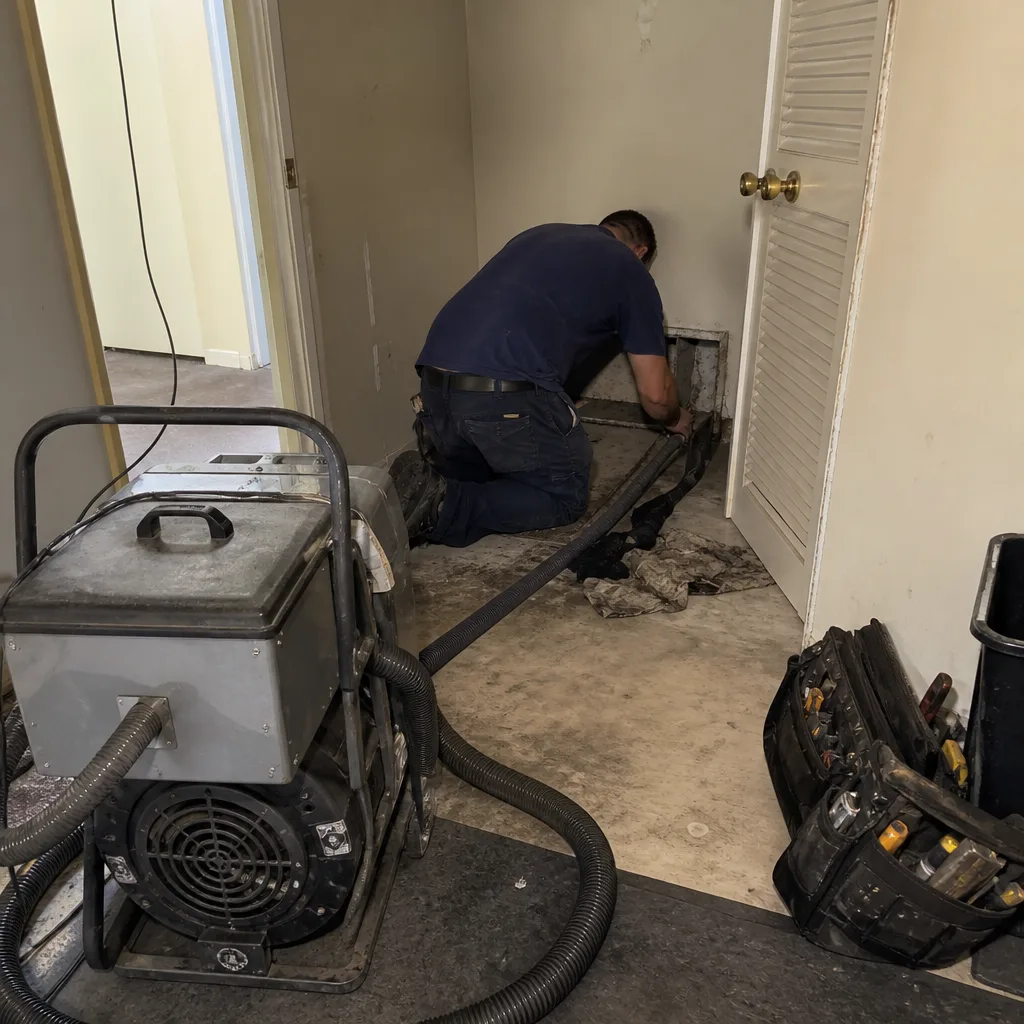 Before
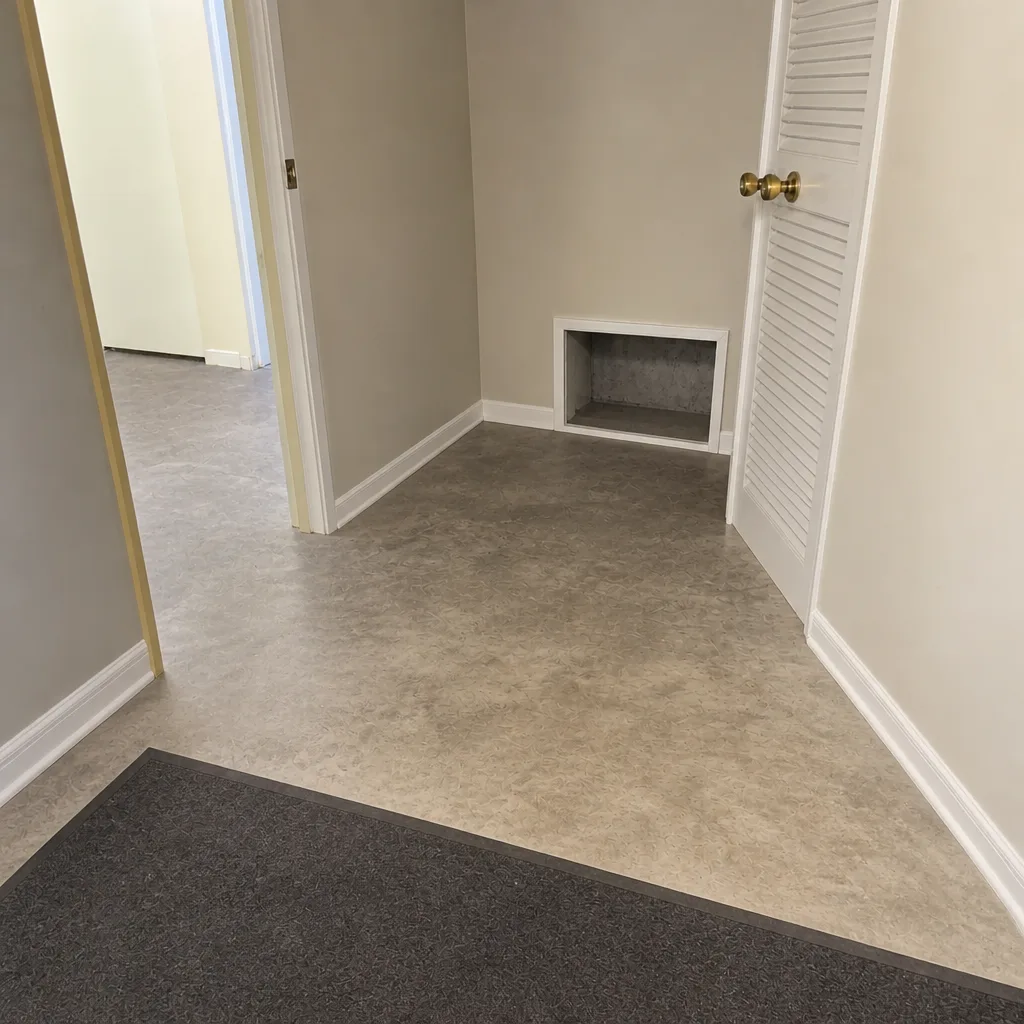 After
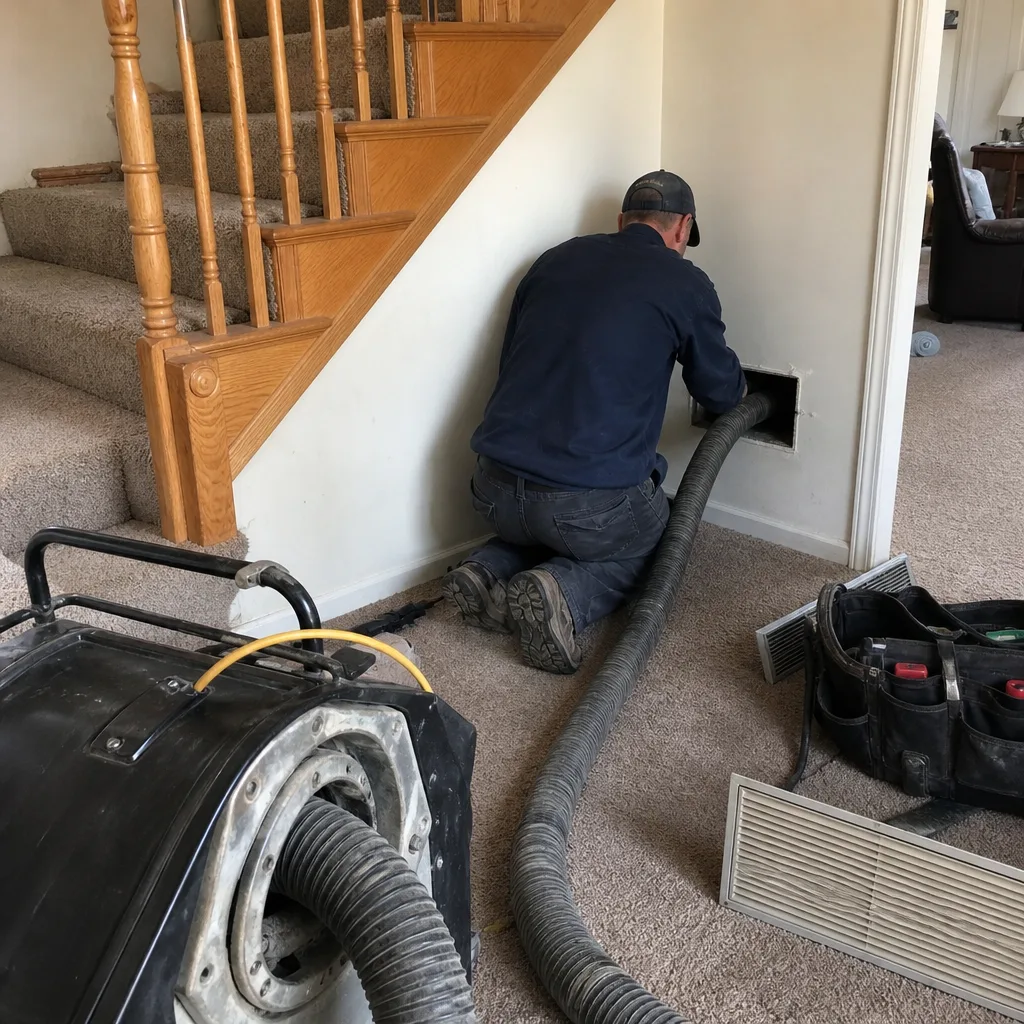 Before
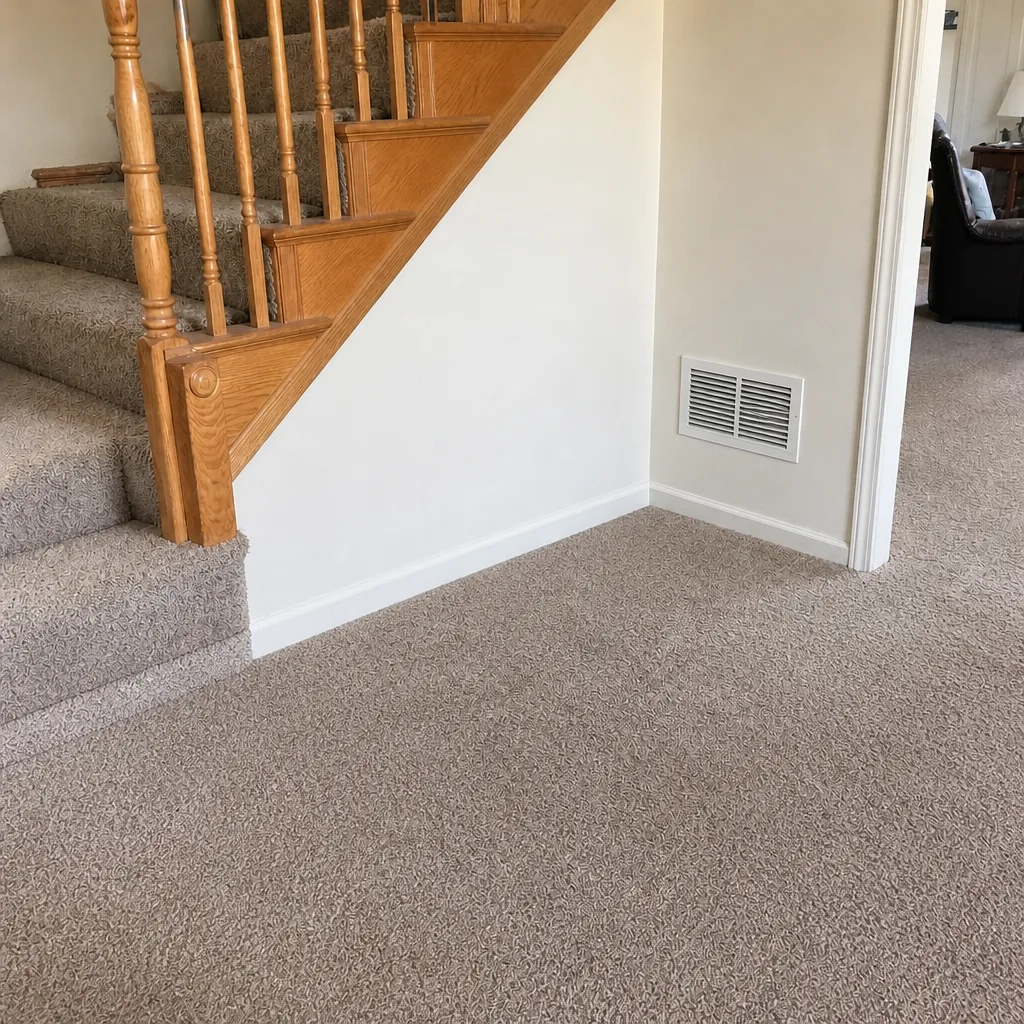 After
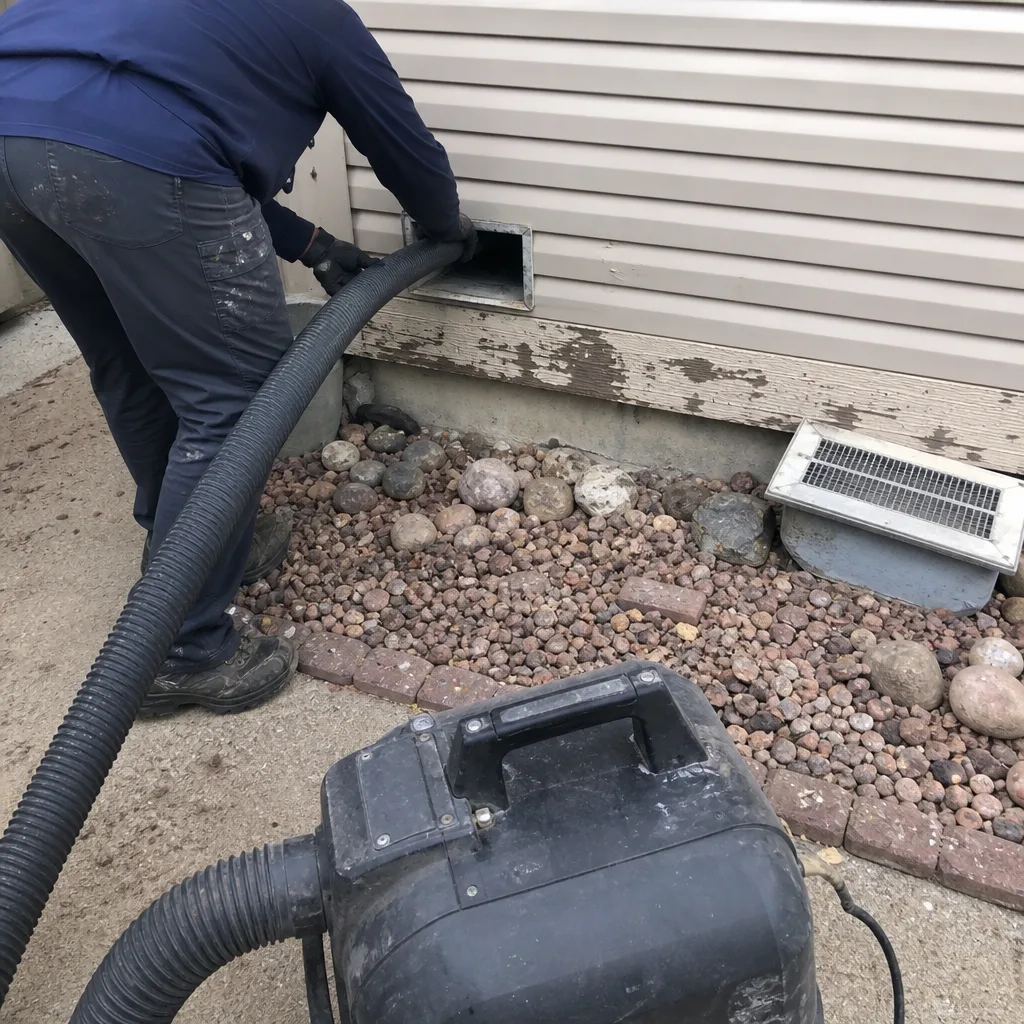 Before
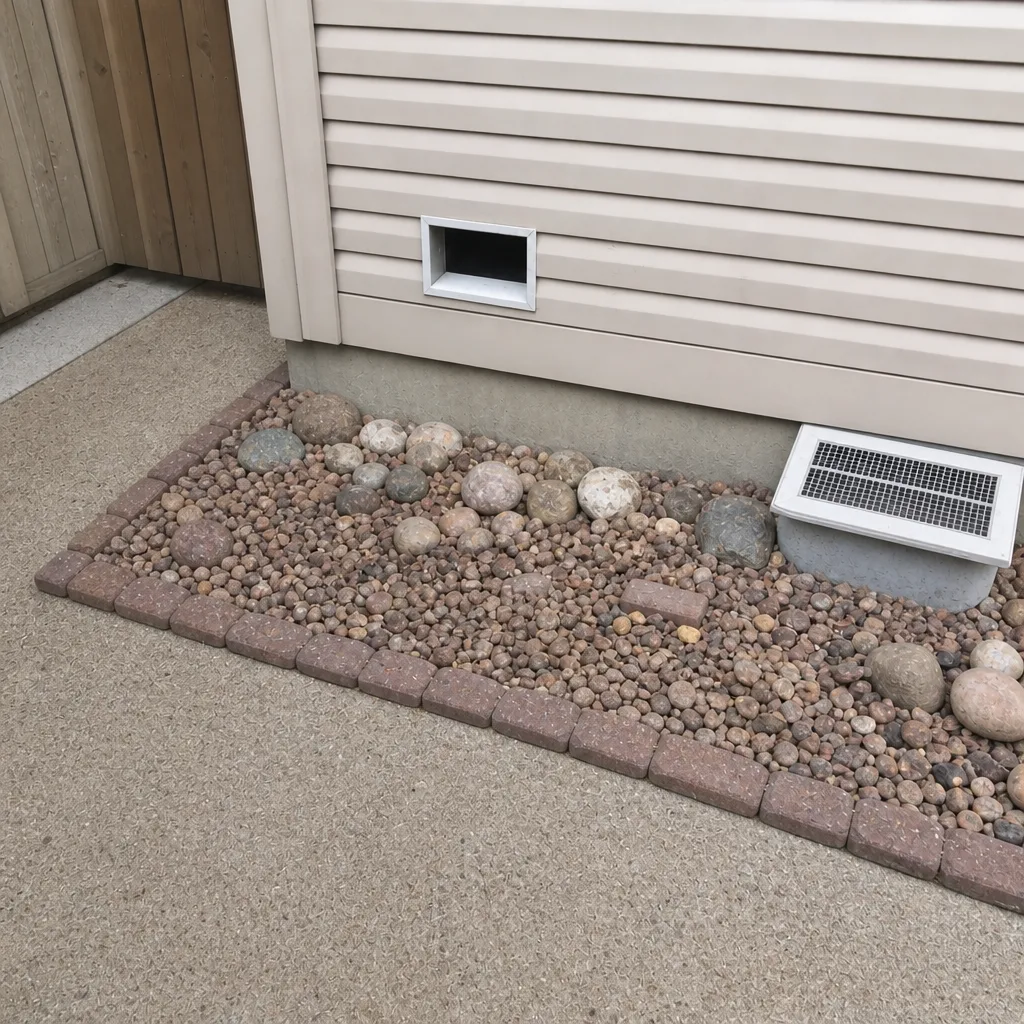 After
When to Call a Professional
Call a professional the moment any of these show up on your walkthrough:
- Smoke odor returns every time the system runs, even after a filter change.
- Visible soot or staining on registers, return grilles, or the air handler interior.
- Flex duct sections that are torn, stained, or collapsed.
- The home sat closed up in a smoke zone for multiple days before you returned.
- Anyone in the home has asthma, COPD, or another respiratory condition.
- The dryer vent hasn’t been cleaned and lint is visible at the hood.
Flagship Air Duct Cleaning offers free estimates in Colorado Springs. Call (866) 293-3740. We answer 24/7. Fast dispatch from 7am to 7pm, Sunday through Friday.
Frequently Asked Questions
Yes. Switch the thermostat to “off” or fan “off” and close any fresh-air intake before smoke gets into the duct system. Running the fan on “auto” or “circulate” keeps pulling outdoor air in through the return and distributing it through every room. Stop the circulation, seal the openings, and run a portable HEPA unit in the living space until air quality outdoors improves. Then have the duct system inspected before running the system normally again.
Typical whole-system cleaning in the Colorado Springs market runs roughly in the range of a few hundred dollars for a standard home, with the final figure set by the written estimate after the technician sees the home. The price is per system, not per vent, and it should be agreed before any work starts. A post-event cleaning that includes the return plenum and air handler is a different job from a routine cleaning, and the estimate should reflect what’s actually there. If you’ve been quoted a per-vent coupon price, ask what’s included and whether the plenum is in the scope. Call (866) 293-3740 for an exact quote, and the estimate is free.
Cheap quotes usually leave the plenum out, skip the air handler, and charge per vent so the final invoice balloons once the technician is on site. The honest comparison is a single flat price per system agreed in writing before work starts, with before-and-after photos of your actual ducts as part of the job. Ask any company you’re considering whether they’ll photograph the before and after and whether the plenum is included. If the answer is vague, the price probably will be too.
You know it was removed when you have before-and-after photos of the same sections and the odor doesn’t return when the system cycles. A thorough cleaning with professional-grade equipment removes the contamination and the source of the odor; a filter swap alone doesn’t. If the smell comes back after a day of running the system, the contamination was in the plenum or the air handler, not the filter. That’s the moment to schedule an inspection from a company that can also repair what it finds. Call (866) 293-3740 to book a free estimate.
Most homes benefit from cleaning about every three to five years under normal conditions, but Colorado Springs’ smoke and wind seasons can shorten that. A home that’s been through a smoke-zone evacuation should be inspected right away, regardless of when it was last cleaned. If the home has pets, recent remodeling, or a smoker, plan on a shorter interval. The honest answer is that interval is a starting point, not a rule; what actually drives the timing is what the inspection finds.
It can, if the ductwork is documented as part of the smoke damage and you request remediation specifically. Many policies cover smoke damage to the structure and contents, and whether the duct system is included varies by policy, so ask your adjuster directly and get the answer in writing. Photograph before cleaning, keep the old filter, and get the inspection summary with photos attached to the claim. That documentation is what makes the difference between a filter replacement and actual remediation coverage.
The Bottom Line
In Colorado Springs, wildfire smoke and high-wind dust events are not a one-off; they’re a season. The homes that come through them with clean air are the ones that had a protocol ready before the event, documented what happened, and took the inspection and sealing steps seriously. Stop the HVAC circulation first. Photograph before cleaning. Get the plenum and air handler inspected. Clear the dryer vent. Seal what opens again next time. And whoever does the work should be able to clean, inspect, and repair in the same visit, so you don’t need a second company when damage is found. That’s the Flagship standard.
If you’d like a free estimate on Flagship Air Duct Cleaning for your Colorado Springs home, call (866) 293-3740.
Written by the team at Flagship Air Duct Cleaning.