
Last updated November 15, 2026
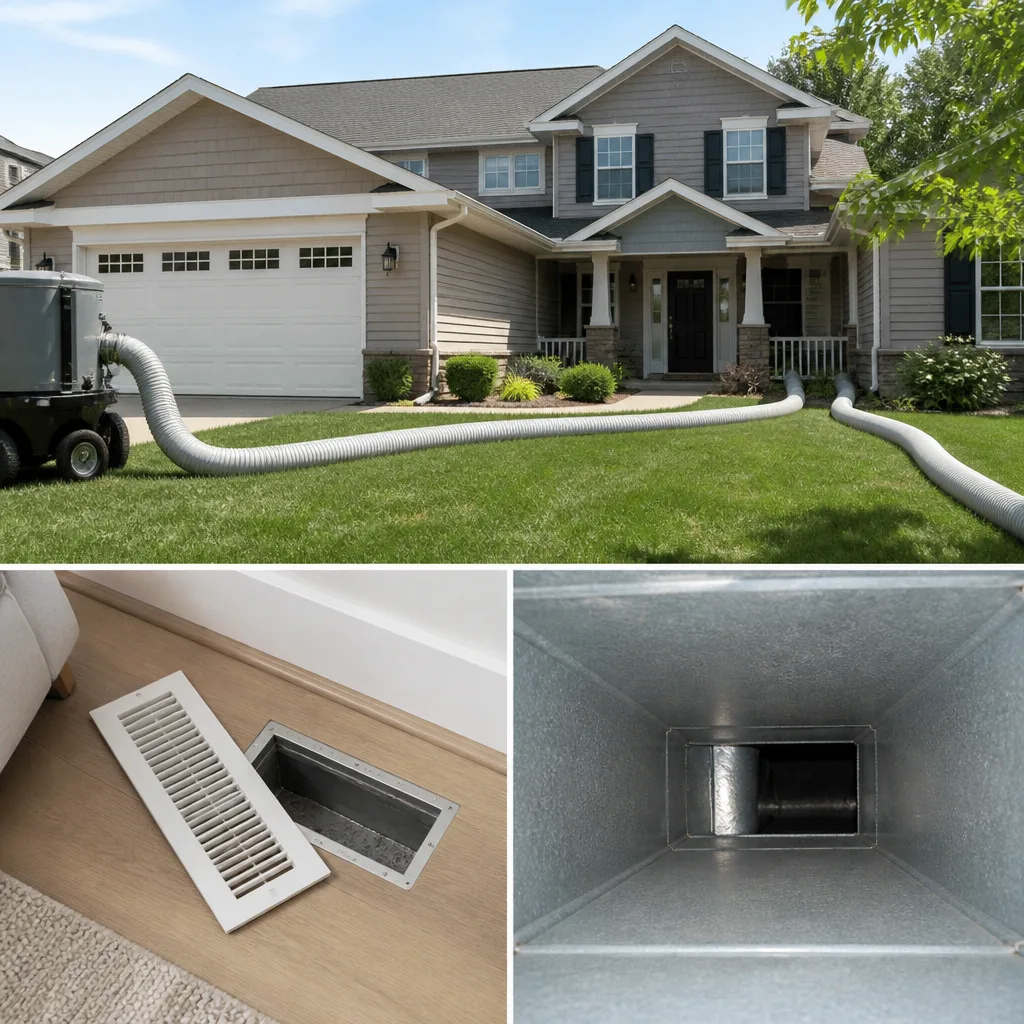 Whole-home duct cleaning
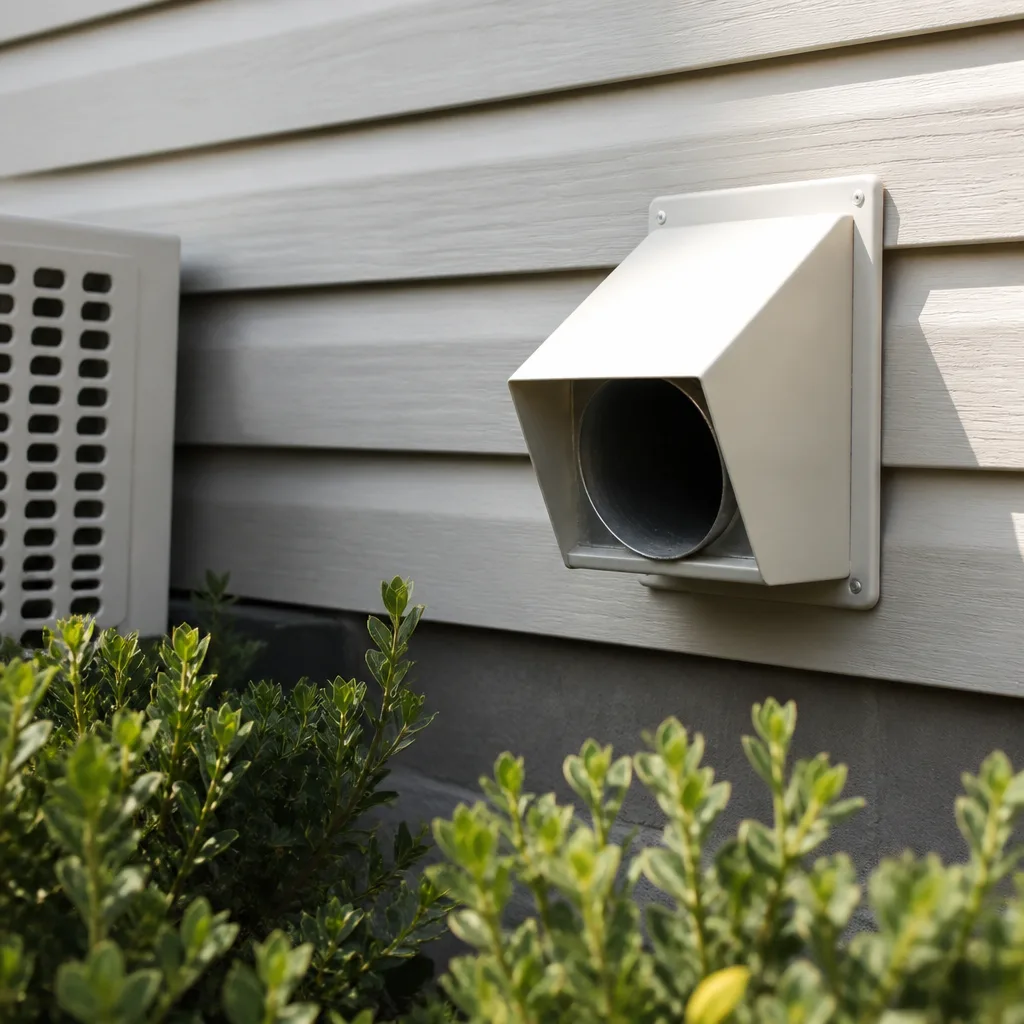 Dryer vent cleaning
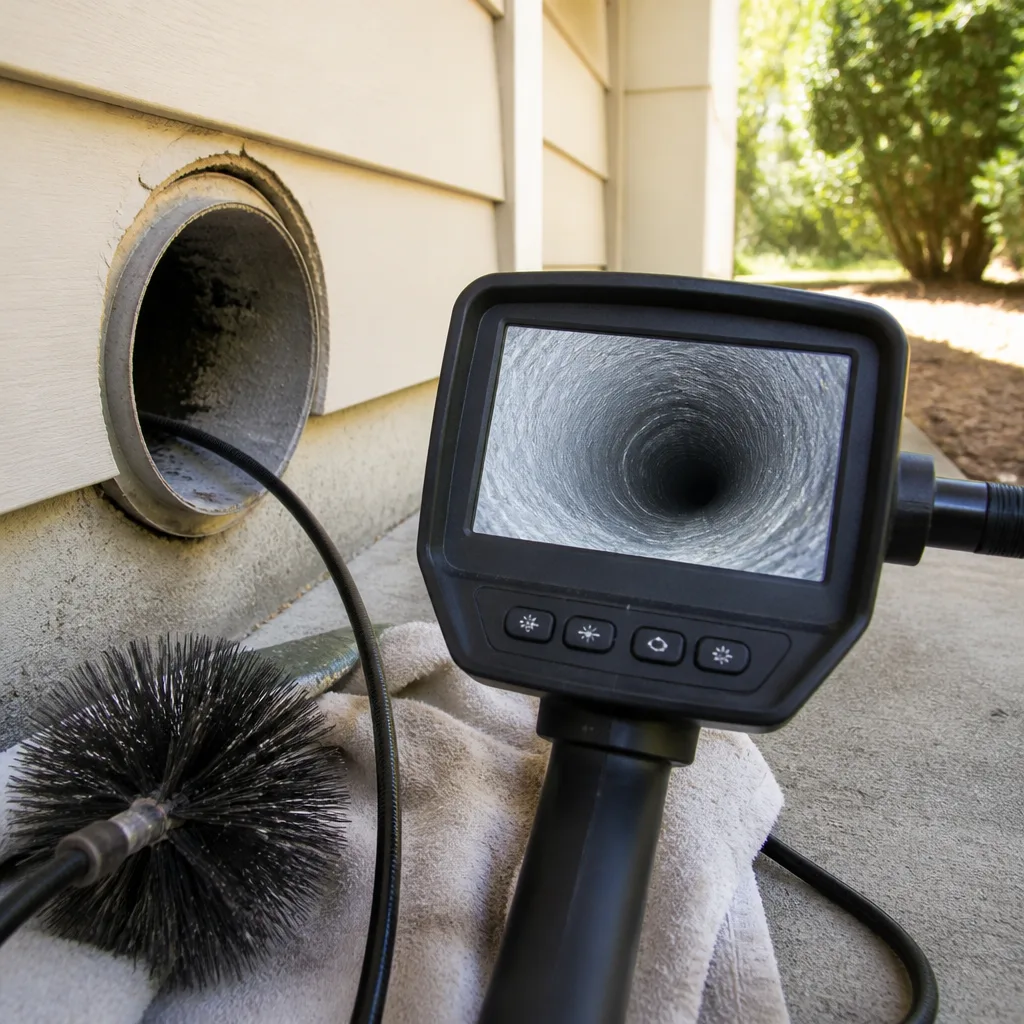 Camera inspection
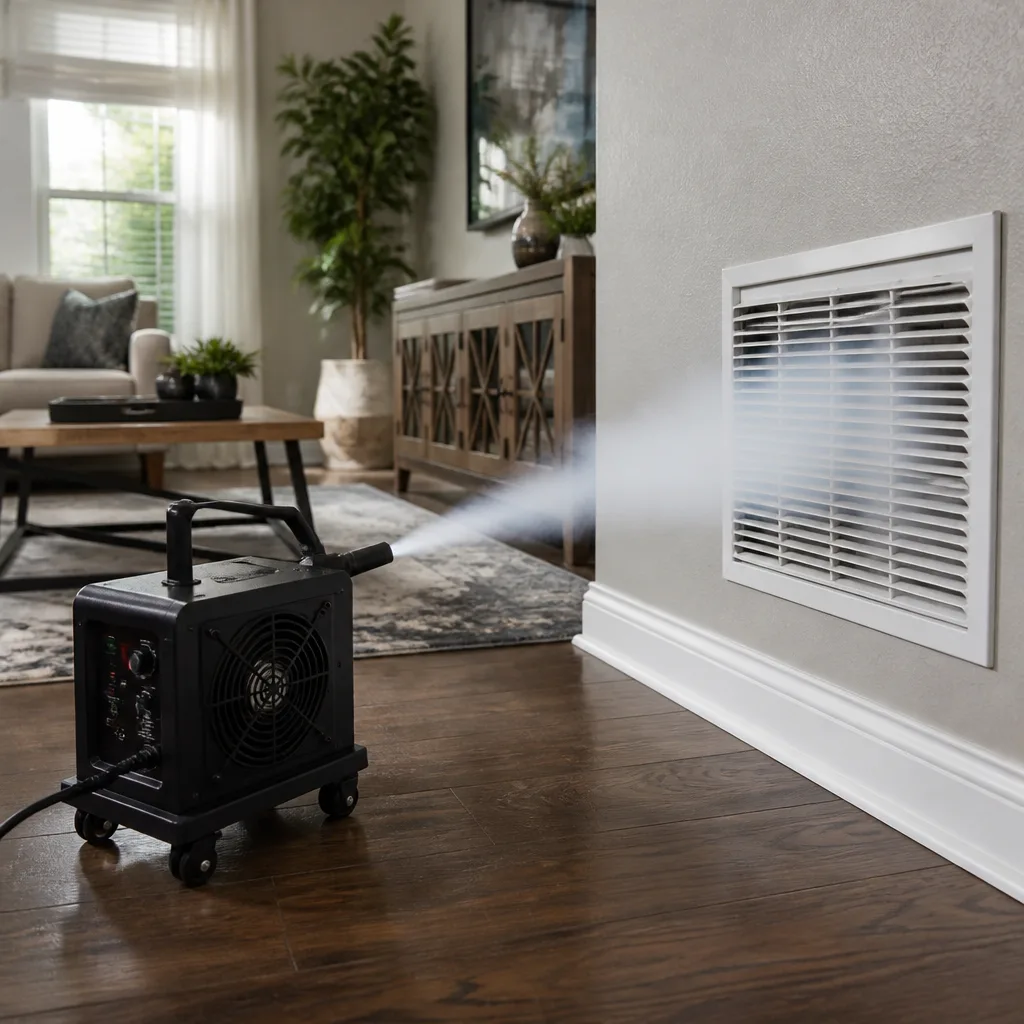 Sanitizing & deodorizing
Whole-system duct and dryer vent check with before-and-after photos - you see exactly what came out of your vents
That "$99 whole-house special" is a bait ad - the real number appears once they are in your hallway, or the "clean" is a shop-vac at the register. We photograph the inside of your ducts before and after instead.
Air Duct Cleaning Cost Breakdown: The Colorado Springs Homeowner’s Reference for 2026
A $299 whole-house duct cleaning and a $799 whole-house duct cleaning can be for completely different services. One is a contact-vacuum pass with a shop vac and a brush; the other is a negative-pressure source-removal cleaning that pulls debris out of the system under controlled vacuum while every supply and return is agitated from the inside. Most quotes don’t tell you which one you’re getting. That’s the single biggest reason Colorado Springs homeowners feel confused comparing bids. This guide decodes every line item in a legitimate quote so you can measure what you’re being offered against the work that actually needs to happen.
Quick Answer
Legitimate whole-system air duct cleaning in Colorado Springs typically runs $350 to $900, with most homes landing between $450 and $700. Below $300 usually means a vent-only vacuum pass with no negative pressure and no source removal. Above $1,200 typically reflects a larger system, difficult access, added services like dryer vent cleaning, or a repair discovered during the job. The written estimate sets the final price, so what matters is what’s on that estimate, not the headline number.
Styles & brands we work with
- Whole-home duct cleaning
- Dryer vent cleaning
- Camera inspection
- Sanitizing & deodorizing
Table of Contents
- What actually drives the cost of air duct cleaning in Colorado Springs?
- The three base cost components: vents, trunk line, and access
- Truck-mounted versus portable equipment: why the price gap is real
- How Colorado Springs home construction affects the quote
- Add-on services: what’s legitimate and what’s an upsell
- Red flags in a low quote
- How to compare two quotes line by line
- What actually happens during a professional cleaning
What actually drives the cost of air duct cleaning in Colorado Springs?
Cost is driven by three measurable things: the number of supply and return vents, the linear footage of main trunk line the equipment has to reach, and how much access creation the system requires before cleaning can start. Everything else in a quote is either a service added on top of those three or a margin line dressed up as necessity. When you compare bids in Colorado Springs, ask for those three numbers explicitly. A quote that never names them is a quote you can’t evaluate.
The reason this matters here more than in a lot of other markets: Colorado Springs has a wide mix of housing stock, from tight 1950s ranches near Old Colorado City to 1990s two-stories with flex duct in the attic to newer builds in the north and east where systems are larger and more compartmentalized. A quote that fits a starter ranch in Stratton Meadows won’t reflect a 2,800-square-foot two-story with three zones and a trunk run that disappears into an insulated chase. Fair pricing here tracks the system, not the zip code.
What a legitimate base cleaning includes:
- Full vent count. Every supply and return is cleaned, not just the visible floor registers.
- Trunk line cleaning. Main runs are brushed and vacuumed from access points, not skimmed.
- Negative pressure maintained during cleaning. The system stays under vacuum so dislodged material leaves the duct, not your living room.
- Source removal of the blower, plenum, and coil cabinet where accessible. This is where the majority of the debris sits.
- Before-and-after documentation. Photos of the actual ductwork in your house.
If a quote is notably cheaper, the difference is almost always in what’s missing from that list. In our experience, the cheapest bids consistently skip trunk cleaning, skip negative pressure, and skip documentation. Those three omissions are what separate a $250 contact pass from a $600 real cleaning. Have a look at what a proper air duct cleaning job actually includes before you read another quote.
The three base cost components: vents, trunk line, and access
This is where the real numbers live. Below are typical Colorado Springs ranges for each component as it appears on a written estimate. Treat them as estimated ranges, not fixed prices. The final price is set per job by the written estimate you receive.
1. Vent count
A typical ranch home in Colorado Springs has 8 to 14 supply vents and 2 to 4 returns. A two-story in the north end or out toward Powers often runs 16 to 22 supplies and 3 to 5 returns. Vents beyond the base count on a quote usually add $10 to $18 each. That sounds small until you’re on the wrong side of a 22-vent house and the quote doesn’t mention vent count at all.
2. Linear footage of main trunk line
Trunk cleaning is priced by reach and complexity, not diameter alone. A short trunk in a crawlspace or basement is fast. A trunk that disappears into an insulated attic chase, or runs behind finished soffits on a two-story, is not. On a Colorado Springs estimate, expect trunk cleaning to account for $75 to $250 of the total depending on how many separate runs and how much access is needed.
3. Access point creation
No system comes from the factory with enough access panels for a proper source-removal cleaning. Cutting small access holes into the trunk, and then sealing them properly with rated tape and a plate, is normal. This runs $25 to $60 per access point on a typical Colorado Springs job. A quote that doesn’t list access point creation is either cutting corners or planning to charge it as a surprise once the technician is on site. Neither is acceptable.
Add those three together for a mid-sized Colorado Springs home and you land in the $450 to $700 range. That’s the honest shape of a real whole-system cleaning. Anything below that range isn’t a deal, it’s a different service. Read more about how we structure quotes at Flagship Air Duct Cleaning.
Truck-mounted versus portable equipment: why the price gap is real
The single most expensive line item a duct cleaning company owns is the vacuum. A truck-mounted negative-pressure system, the kind built around professional-grade equipment, generates real suction at the duct and maintains a sealed system while work happens. A portable shop vac or a canister unit pulled out of the back of a van generates a fraction of that. The price difference between the two isn’t profit margin. It’s equipment cost, power draw, and the labor required to keep a system under vacuum while you work.
What we bring to a Colorado Springs job:
- Rotobrush units for agitation and source removal inside the duct itself, typically paired with a truck-mounted vacuum.
- Nikro equipment for high-efficiency containment and filtered extraction, especially on jobs with heavy debris or return-side cleaning.
- Containment and filtration matched to indoor air quality systems, so a Honeywell or Aprilaire setup on the return side isn’t bypassed or left open.
A portable unit plugged into a garage outlet might pull 200 CFM on its best day. A properly set up truck system can move the volume needed to keep an entire trunk line under negative pressure while you work. That’s the difference between vacuuming what’s reachable and actually removing what’s in the system. Ask any company you’re considering what they’re bringing. “A vacuum” isn’t an answer. The model and setup should be easy for them to describe.
How Colorado Springs home construction affects the quote
Construction type is the second-biggest lever on cost, and it’s one most homeowners never ask about. The Rockies foothills climate means cold winters and dry summers, and the homes built here reflect that. Tightly sealed houses with heavy insulation trap dust more effectively than older loose builds. That changes how much debris accumulates and how much has to come out. Here’s how the three most common construction types affect pricing in Colorado Springs:
- Ranch on slab. Short trunk runs, usually three or four main branches, all accessible from the same level. This is the fastest job and typically the cheapest. Expect the low end of the range.
- Two-story. The trunk splits, runs vertically through interior walls, and often serves zones on opposite sides of the house. More access points, more setup time, and typically a 20 to 40 percent higher total than a comparable ranch.
- Crawlspace or basement with exposed ductwork. Easier to access the trunk, but the exposed ductwork often collects more dust because it’s outside the conditioned envelope. Cleaning takes longer because there’s more to clean, even if access is easy.
Older homes in established neighborhoods like Old North End or the Westside often have retrofitted ductwork that was installed after the fact. That means non-standard runs, tighter clearances, and more access point creation. Newer builds out east tend to have flex duct and larger system footprints, which clean differently and take longer.
None of this changes the base service. It changes the scope. When you get a quote for a Colorado Springs home, the estimate should reflect what kind of house you have. A company that quotes the same price for a ranch and a two-story hasn’t asked the right questions.
Add-on services: what’s legitimate and what’s an upsell
Add-ons are where pricing transparency usually breaks down. Some add-ons genuinely improve outcomes. Some don’t change anything about your air quality. Here’s the honest split, ranked roughly by value:
Legitimate add-ons
- Dryer vent cleaning ($120 to $220 typical in Colorado Springs). This is a fire-safety service, not an air quality one. The U.S. Fire Administration links clogged dryer vents to thousands of residential fires annually. Most duct cleaning companies treat it as an optional add-on. We treat it as its own standalone safety service, and you can book it without buying a duct cleaning at all. See dryer vent cleaning.
- Air duct repair discovered during cleaning ($75 to $400 depending on scope). Loose joints, disconnected flex, crushed runs, torn insulation inside the duct. If the cleaning surfaces damage, the repair is real and worth doing. It’s also why we do repair at all: so the customer isn’t left holding a bad report from one company and a repair quote from another.
- Return-side cleaning on systems with heavy accumulation. Often included, sometimes quoted separately. Legitimate when it’s tied to visible conditions.
Often-questionable add-ons
- Sanitizing or fogging treatments ($100 to $300). EPA-registered products have their place, but if a system is properly cleaned to source-removal standards, sanitizing rarely changes the outcome. It should be offered when there’s a legitimate condition (microbial growth visible on surfaces, animal intrusion) and declined otherwise.
- UV light installation. This is an HVAC scope, not a duct cleaning scope. UV lights can help with coil-side microbial growth, but they don’t clean ductwork, and installing one during a cleaning job is rarely the right call without a separate air quality assessment first.
- “Sealing” treatments applied as a mist. Spray-on sealants have legitimate uses on badly degraded flex duct. As an every-job line item, they don’t do much.
If a company leads with the add-ons before they’ve quoted the base service, that’s a sign they’re pricing by menu rather than by system. Ask for the base first, then decide on extras once you see what your ducts actually look like.
Red flags in a low quote
Colorado Springs has no shortage of duct cleaning companies advertising $99 or $149 whole-house cleanings. Some of these are legitimate loss-leaders. Most aren’t. Here are the specific patterns that separate a real low quote from a red flag:
- Per-vent pricing with no system minimum. A quote of “$15 per vent” that gets to $180 for a 12-vent home is not a whole-system cleaning. It’s a vent vac with no trunk work and no negative pressure. Every legitimate quote should have a system-level minimum that reflects the trunk and equipment setup.
- No camera inspection included. A proper cleaning starts with a visual inspection of the plenum and trunk, and today that means a camera on the interior of the duct, not a flashlight. A quote that doesn’t mention inspection is a quote that skips the diagnostic step.
- No before-and-after documentation offered. If the company can’t show photos of your own ducts before and after, you have no way to verify the work was done. This is the single most common complaint in the trade.
- No mention of access point creation or hole sealing. Either they’re not creating proper access (meaning trunk work can’t happen) or they’re doing it unannounced.
- Sale pressure in the moment. “Today only” pricing for a scheduled service is a red flag.
- Quotes that don’t ask about your system. Every legitimate quote starts with questions: how many vents, what’s the trunk configuration, what construction type. A quote given without those questions is a guess.
The pattern here is simple: the low quote is low because the work is different. Once you understand that, “why are some quotes so much cheaper?” stops being a mystery and becomes a checklist. Start with the Colorado Springs service overview if you want to see how a proper quote is structured before you call.
How to compare two quotes line by line
Comparing duct cleaning quotes isn’t hard once you know what to look for. Below is the exact comparison method we recommend. Take it out of your inbox and work it as a checklist against each quote before you decide.
- Does the quote name the equipment? Rotobrush, Nikro, Abatement Technologies, and comparable professional systems should be named or at least described. “Our vacuum” isn’t enough.
- Is negative pressure described? If the quote doesn’t mention negative pressure or a sealed system, the cleaning isn’t being done to source-removal standard.
- Is the vent count on the quote? The number of supply and return vents must be on the estimate. A range is not enough.
- Is trunk line cleaning included, or priced separately? Legitimate whole-system cleaning includes trunk cleaning. A “vents only” or “unlimited vents” quote that doesn’t mention the trunk isn’t the same service.
- Is access point creation a line item? Cutting access into the trunk is normal. If it isn’t listed, either it isn’t happening or the price is going up once they arrive.
- Is documentation included? Before-and-after photos of your own system should be in every quote.
- Is the price firm and per-system, or does it depend on what they find on site? A firm per-system price, set before work starts, is what you want. Anything else opens the door to a “surprise” invoice.
Stack two quotes side by side against those seven questions and the picture becomes obvious in about five minutes. The one that answers all seven is the one worth hiring. The one that answers three is the reason the whole industry has a bad reputation.
What actually happens during a professional cleaning
Here’s the sequence we follow on a Colorado Springs job. It’s roughly universal among companies doing proper source-removal work, so it’s also a good reference for what to expect from whoever you hire.
- Walkthrough and system mapping. Every vent gets located and counted. The trunk configuration is traced. The blower and air handler are identified.
- Camera inspection. A camera is run into the trunk and plenum. This is where we find out what kind of cleaning is actually needed, and where debris is concentrated.
- Setup and containment. The vacuum is connected, negative pressure is established, and every open vent is sealed so nothing escapes into the living space. IAQ components on the return side, including Honeywell or Aprilaire filters and bypasses, are either protected or cleared with the homeowner before the system goes under vacuum.
- Source removal, top to bottom. Blower, air handler, plenum, trunk, and branch lines are cleaned in order. Brushing plus agitation, with the vacuum running the entire time.
- Access point sealing. Any access holes cut into the trunk are sealed with rated materials and left in a finished state.
- Before-and-after photos taken during the job. Documentation is reviewed with the homeowner before the crew leaves.
- Damage report. Any disconnected flex, crushed runs, or torn insulation is noted and quoted on the spot, so a repair can be scheduled or done right away. Cleaning without repair capability leaves the customer to chase a second company.
We use Rotobrush and Nikro equipment because both are built for this sequence, and both hold up to the containment demands of a sealed system. If a company you’re considering doesn’t follow a sequence roughly like this one, that’s a good question to ask them why not.
Common Mistakes to Avoid
- Hiring on price alone. The $99 quote and the $699 quote are typically for two different services. Compare scope, not numbers.
- Assuming the cheapest quote covers the trunk. “Whole house” on a quote can mean vents only. Ask explicitly whether trunk line cleaning and source removal are included. This matters more in Colorado Springs two-stories where the trunk is a major debris reservoir.
- Skipping the before-and-after photos. If the company doesn’t provide them, you have no evidence the work happened. Ask before booking, not after.
- Adding sanitizing by default. Sanitizing is a condition-based add-on, not a standard part of the cleaning. If it’s on every quote at the same price, push back and ask why.
- Ignoring dryer vent cleaning because it’s “a different service.” On a Colorado Springs home with a long dryer run through a cold exterior wall, lint accumulation is real and the fire risk is real. It’s worth pricing as its own line item.
- Not asking about access point creation. Access holes are normal. Unannounced charges for them aren’t. Get it on the quote up front.
- Booking a cleaning when you actually need a repair. If a duct has crushed or disconnected, cleaning the rest of the system doesn’t fix the problem. Pair a full inspection with the cleaning, and hire a company that can do the repair.
See the difference
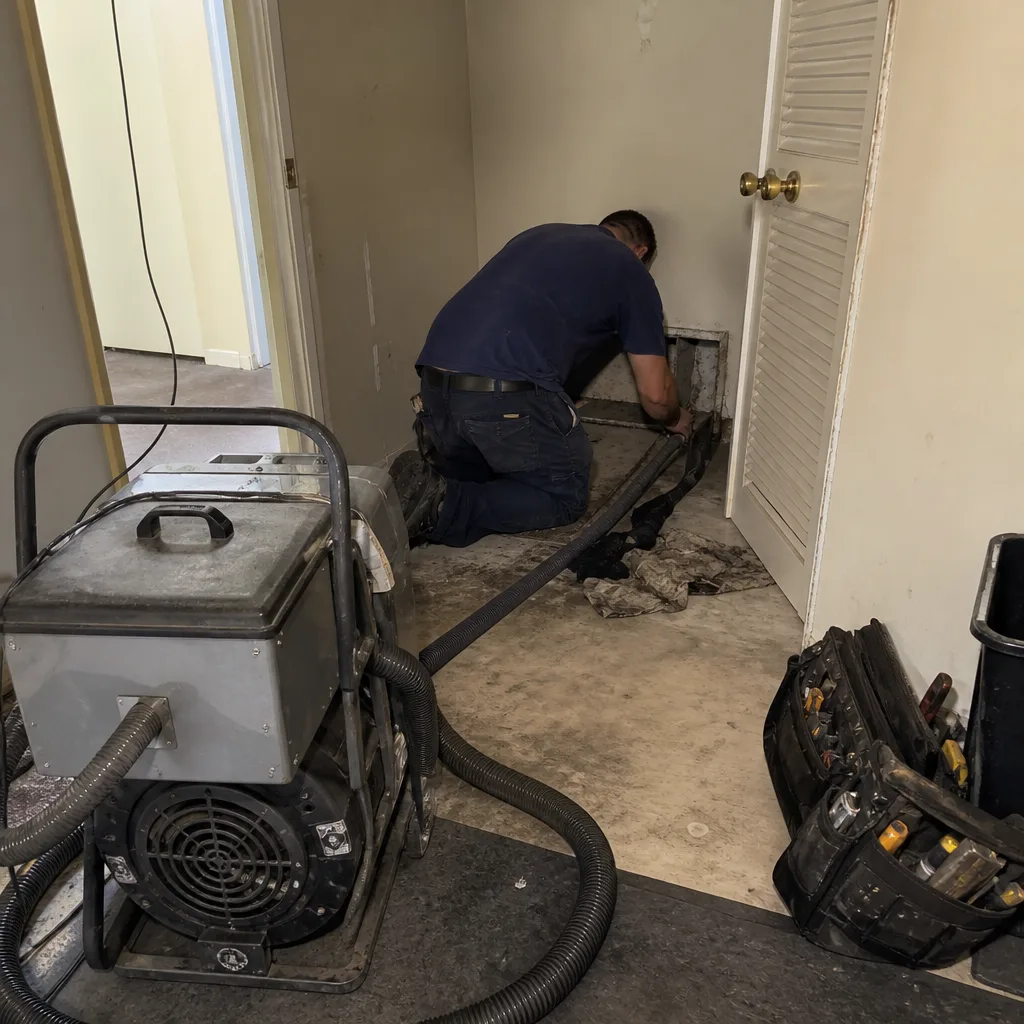 Before
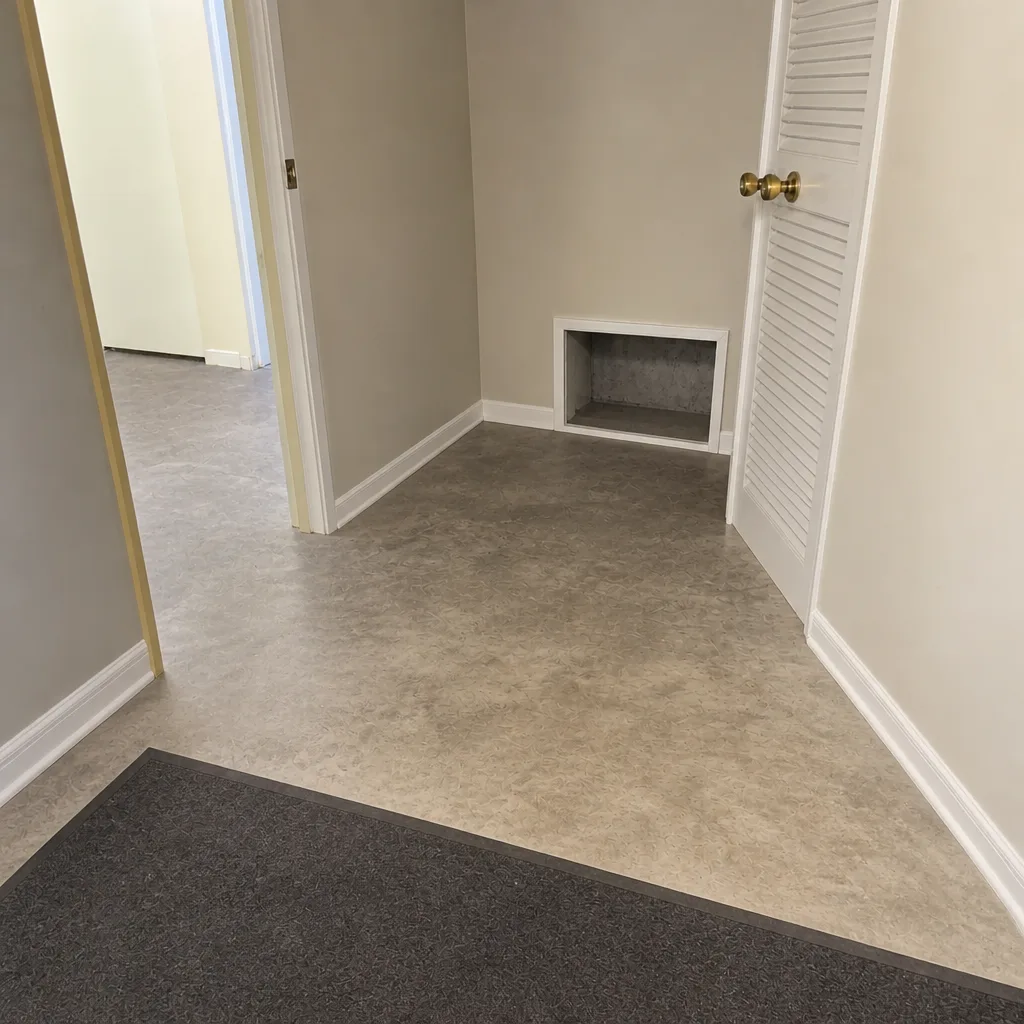 After
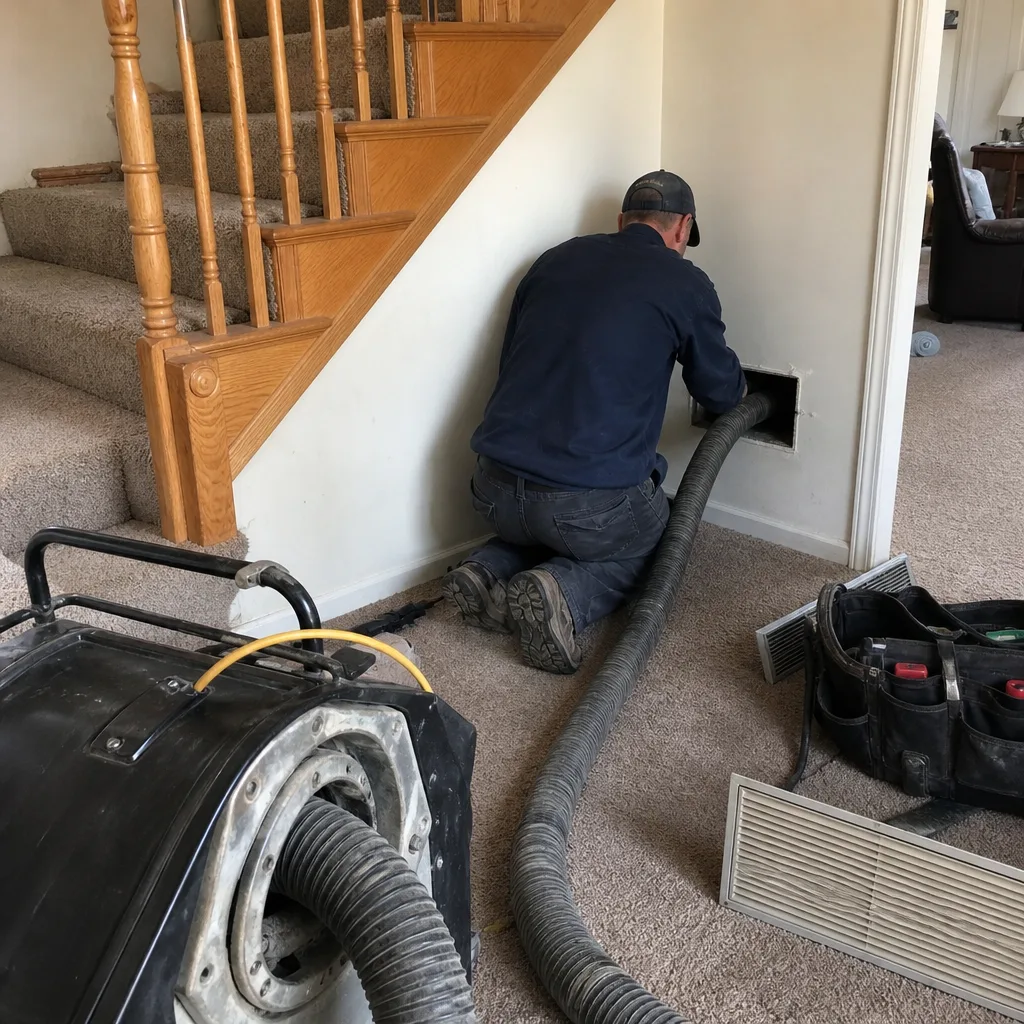 Before
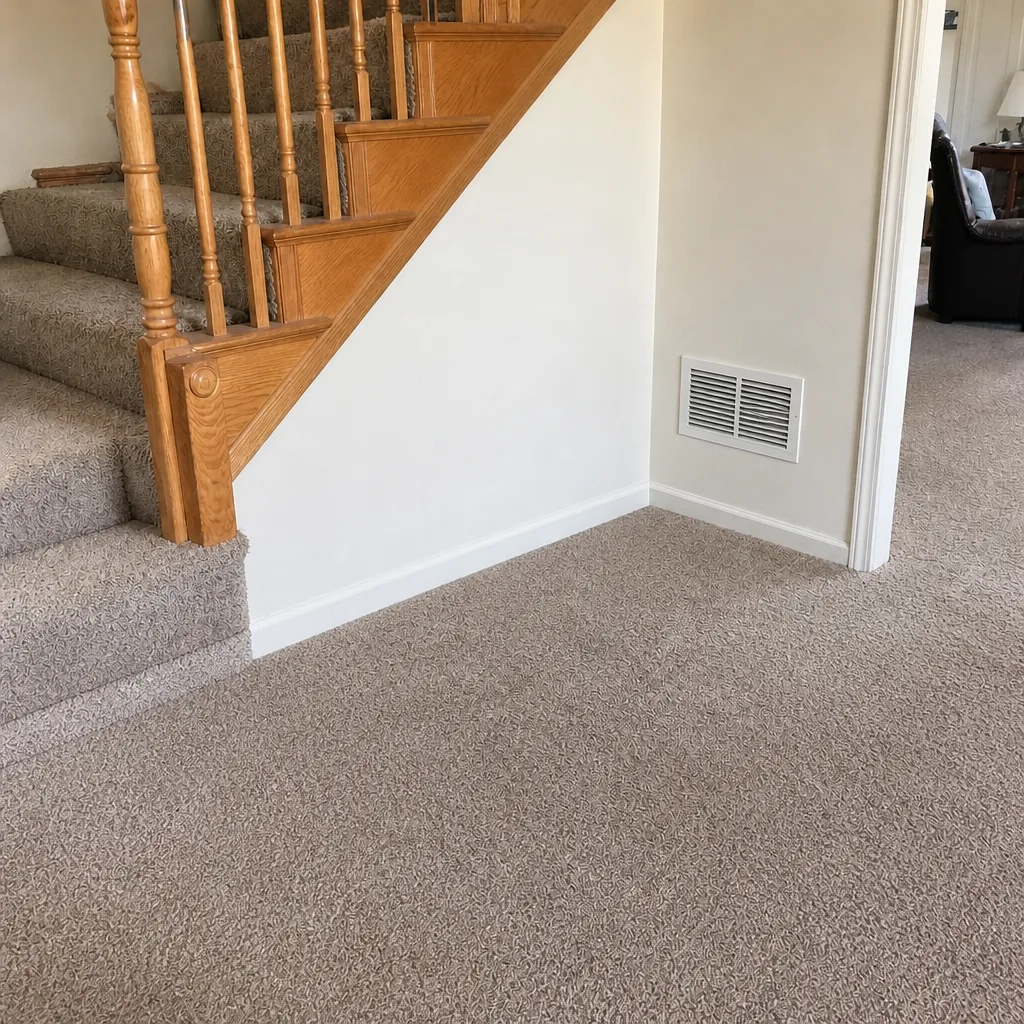 After
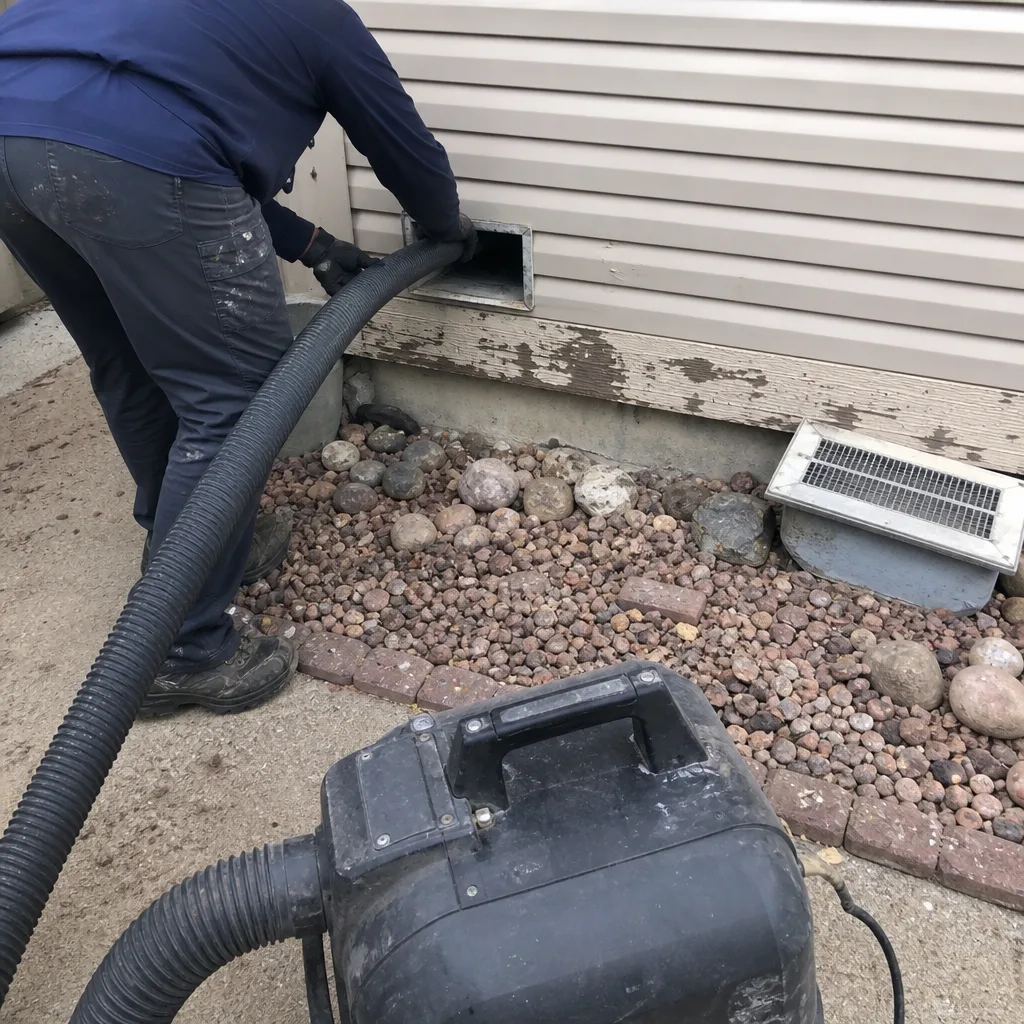 Before
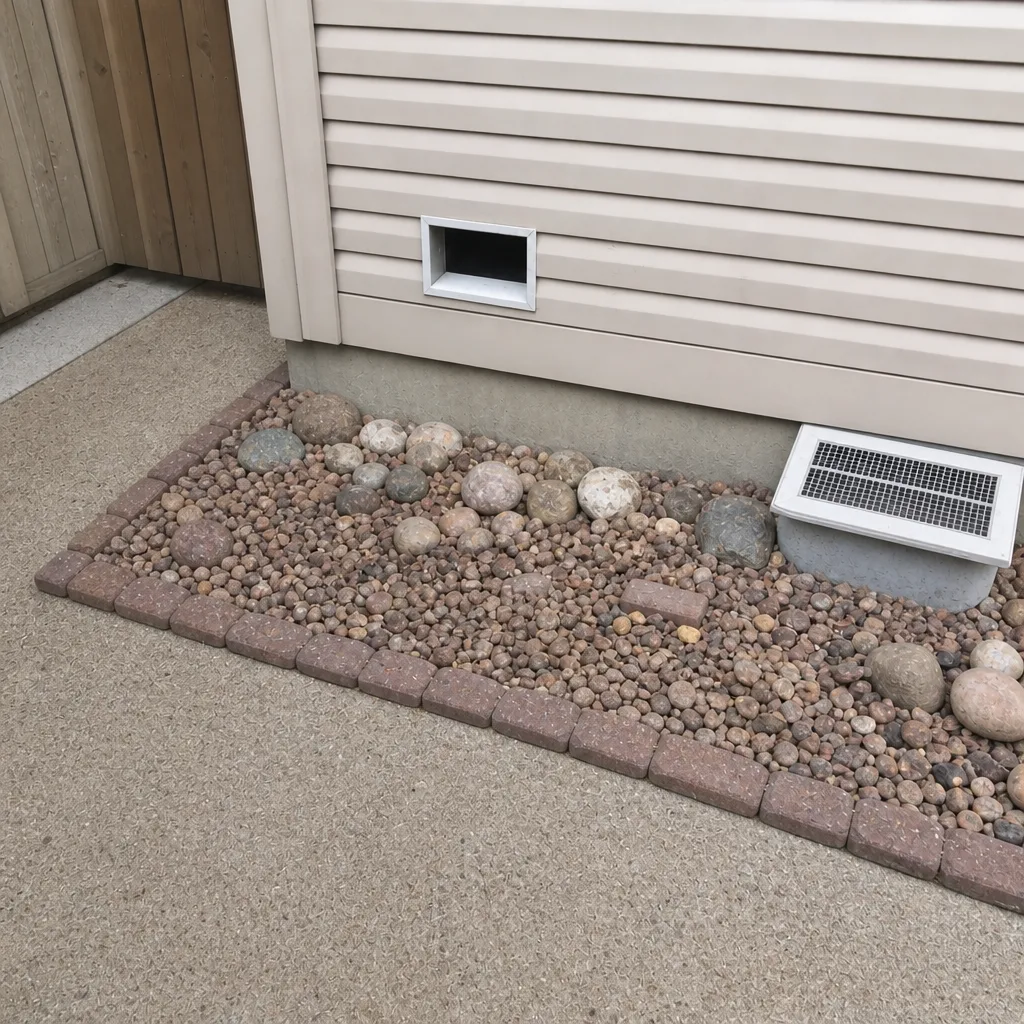 After
When to Call a Professional
Some ductwork problems are obvious from inside the house. Visible dust blowing out of registers when the system starts is a signal. So is a musty smell that gets stronger when the heat runs, or a filter that’s loaded within a week of changing it. Uneven heating or cooling between rooms in a two-story Colorado Springs home often points to a disconnected or crushed run behind drywall. If someone in the house has allergies or asthma that seem worse indoors, or if you’ve moved into a home whose duct history you don’t know, a professional inspection tells you what’s actually in the system.
If you’re already planning a cleaning, having the dryer vent checked in the same visit is practical, since both are on the same type of job. Flagship Air Duct Cleaning offers free estimates in Colorado Springs – call (866) 293-3740. We answer 24/7. Fast dispatch from 7am to 7pm, Sunday through Friday.
Frequently Asked Questions
Most Colorado Springs homeowners pay between $350 and $900 for legitimate whole-system air duct cleaning, with $450 to $700 being the most common range. Larger homes, harder access, or added services push the total higher; anything below $300 usually means a vent-only contact vacuum with no negative pressure or trunk cleaning. Call (866) 293-3740 for an exact quote – estimates are free.
Cheap quotes are cheap because the work is different, not because the company is more efficient. The difference usually comes down to three omitted items: no negative-pressure vacuum, no trunk line cleaning, and no access point creation. Any one of those missing and the cleaning is not removing the debris sitting in your actual duct system. Call (866) 293-3740 and we’ll walk you through what a real quote should include – estimates are free.
Before-and-after photos of your own ductwork are the proof. A camera inspection before cleaning and photographic documentation after is standard on every job worth paying for. If a company can’t show you pictures of your own system, you have no way of knowing what happened inside the ductwork. Call (866) 293-3740 to schedule an inspection with documentation – estimates are free.
For most Colorado Springs homes, every three to five years is a reasonable interval when the HVAC system has a good filter and the return ducting is sealed. Move faster if you’ve had renovations, water intrusion, or pets, or if the home’s duct history is unknown. There’s no fixed rule; the right interval depends on what the ducts look like, and a camera inspection tells you that faster than any schedule. Call (866) 293-3740 to book one – estimates are free.
Yes, in a subtle way. Cold, dry winters mean the furnace runs for long, continuous stretches, and each cycle pushes a full volume of air through the ductwork. Tightly sealed newer homes hold onto fine dust rather than letting it escape through the envelope, and that dust settles into trunk runs and returns. The result is that homes here can accumulate dust faster than the three-to-five-year rule of thumb suggests, especially in two-stories with longer trunk runs. Call (866) 293-3740 to talk through your specific system – estimates are free.
It’s practical to do both in one visit, but they’re separate services solving separate problems. Dryer vent cleaning is fire prevention; air duct cleaning addresses air quality and system efficiency. We treat dryer vent cleaning as its own standalone service and price it that way. Booking both together saves the trip, not the work. Call (866) 293-3740 to schedule either – estimates are free.
The Bottom Line
The price of air duct cleaning in Colorado Springs isn’t a mystery once you know what’s on the estimate. Vents, trunk footage, and access point creation add up to $350 to $900 for a legitimate whole-system job. Truck-mounted negative pressure, camera inspection, and before-and-after documentation are what separate a real cleaning from a $99 contact pass. Add-ons like sanitizing are condition-based, not standard; dryer vent cleaning is worth pricing as a separate safety service; repairs found on site should be fixable by the same company. Compare quotes against the seven-point checklist in this guide and the choice stops being confusing. The written estimate sets the final price, and it should be firm before work starts.
Get a Free Estimate
If you’re evaluating a quote or about to book a cleaning, getting a second honest number is the fastest way to know what you’re looking at. Flagship Air Duct Cleaning provides air duct cleaning, dryer vent cleaning, and air duct repair in Colorado Springs, and we’ll quote a real per-system price in writing before any work begins. You’ll see before-and-after photos of your own ducts, and if we find a problem inside the system, we can fix it rather than hand you a report and send you looking for another company. Professional-grade equipment, cameras on the inspection, and the same standard applied to every job. Call (866) 293-3740 for a free estimate. We answer 24/7. Fast dispatch from 7am to 7pm, Sunday through Friday. Visit Flagship Air Duct Cleaning to see how we work, and book an air duct cleaning or a dryer vent cleaning when you’re ready.
Written by the team at Flagship Air Duct Cleaning.