
Last updated November 15, 2026
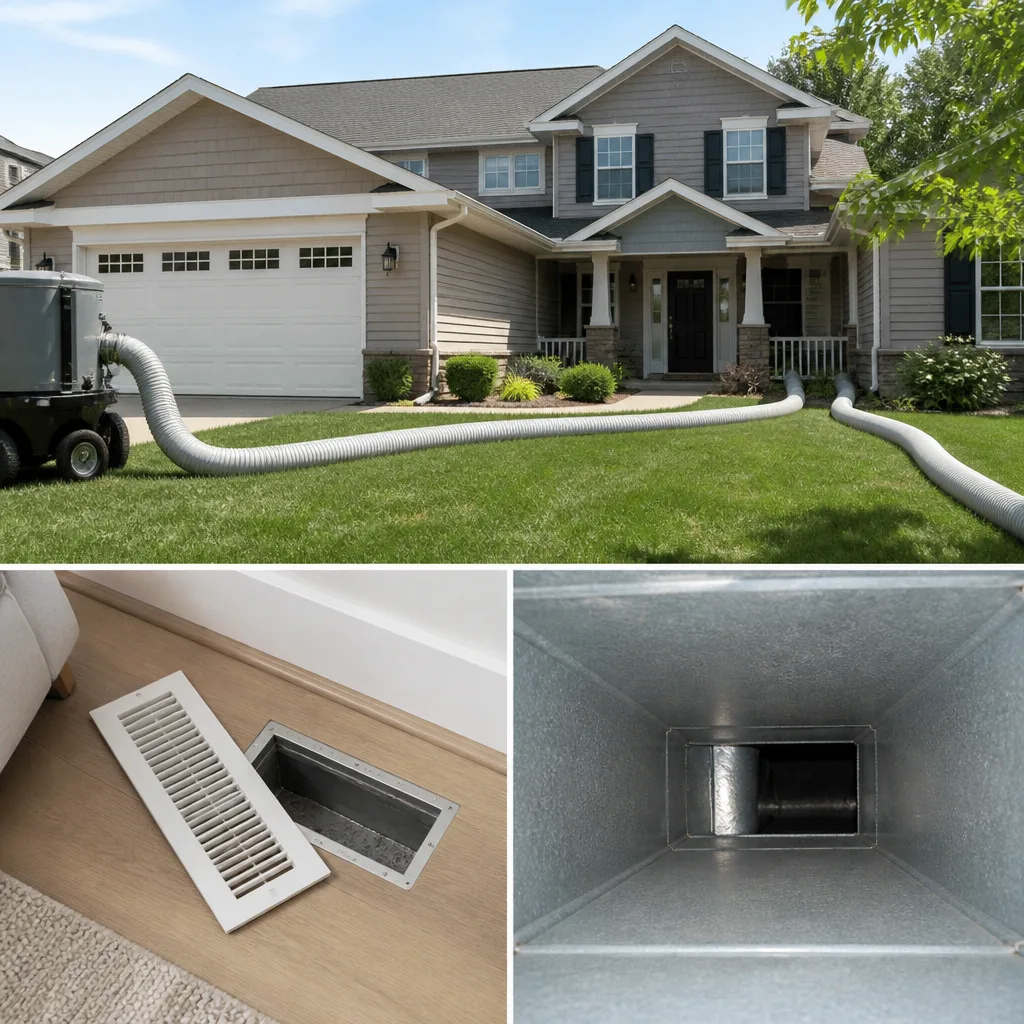 Whole-home duct cleaning
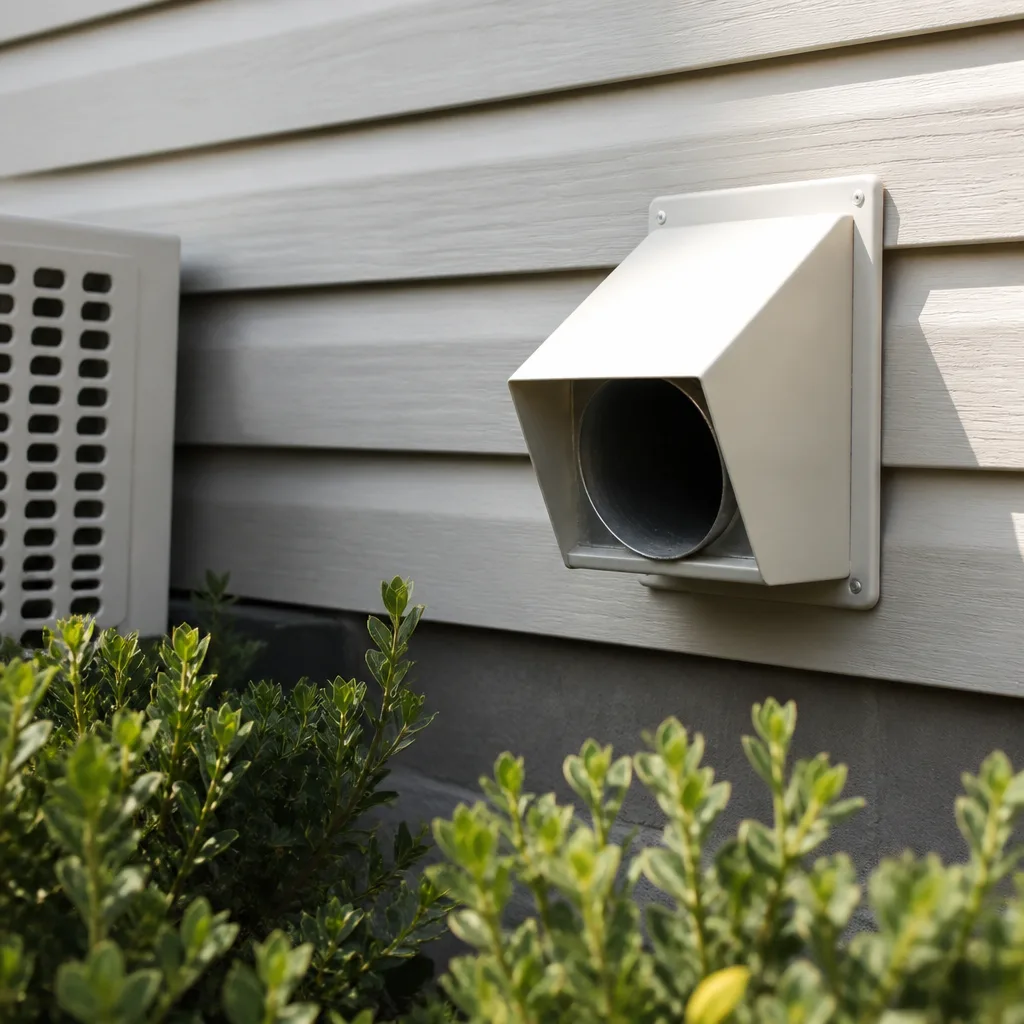 Dryer vent cleaning
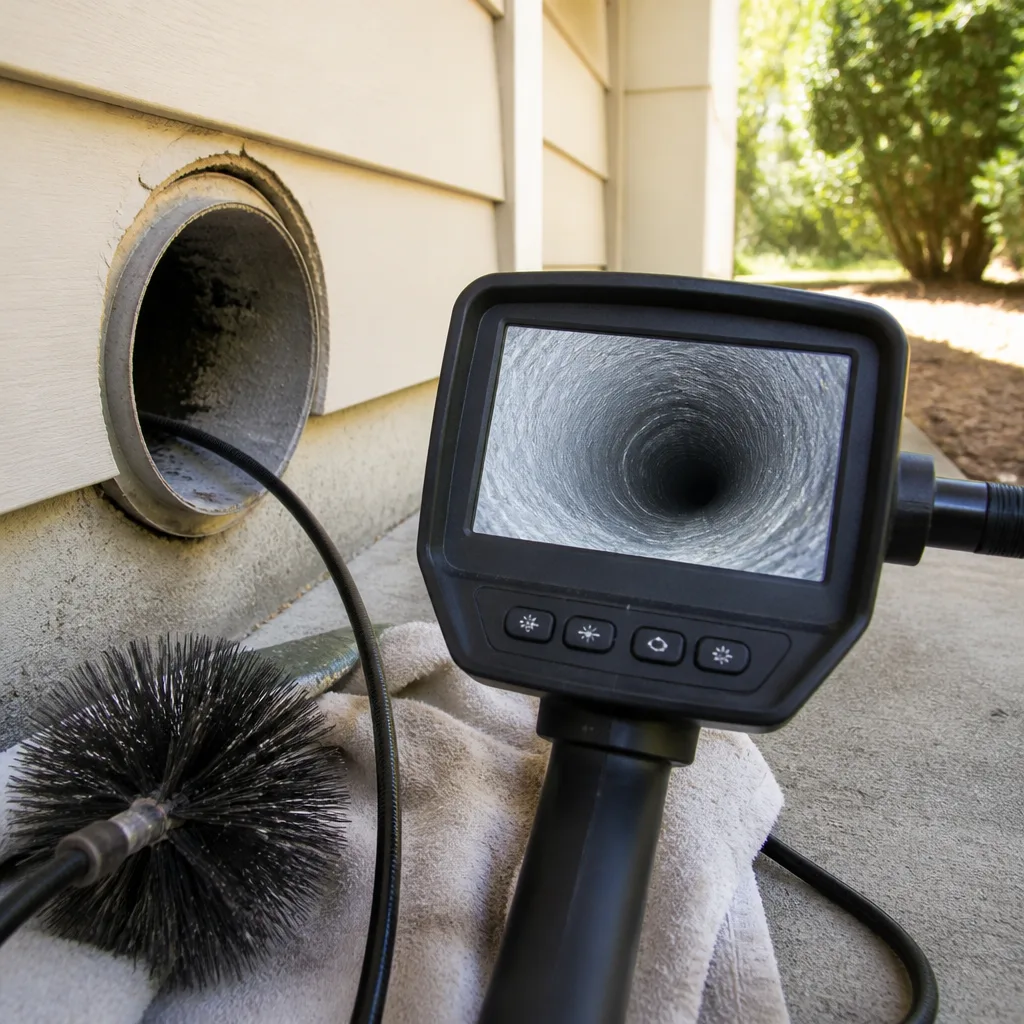 Camera inspection
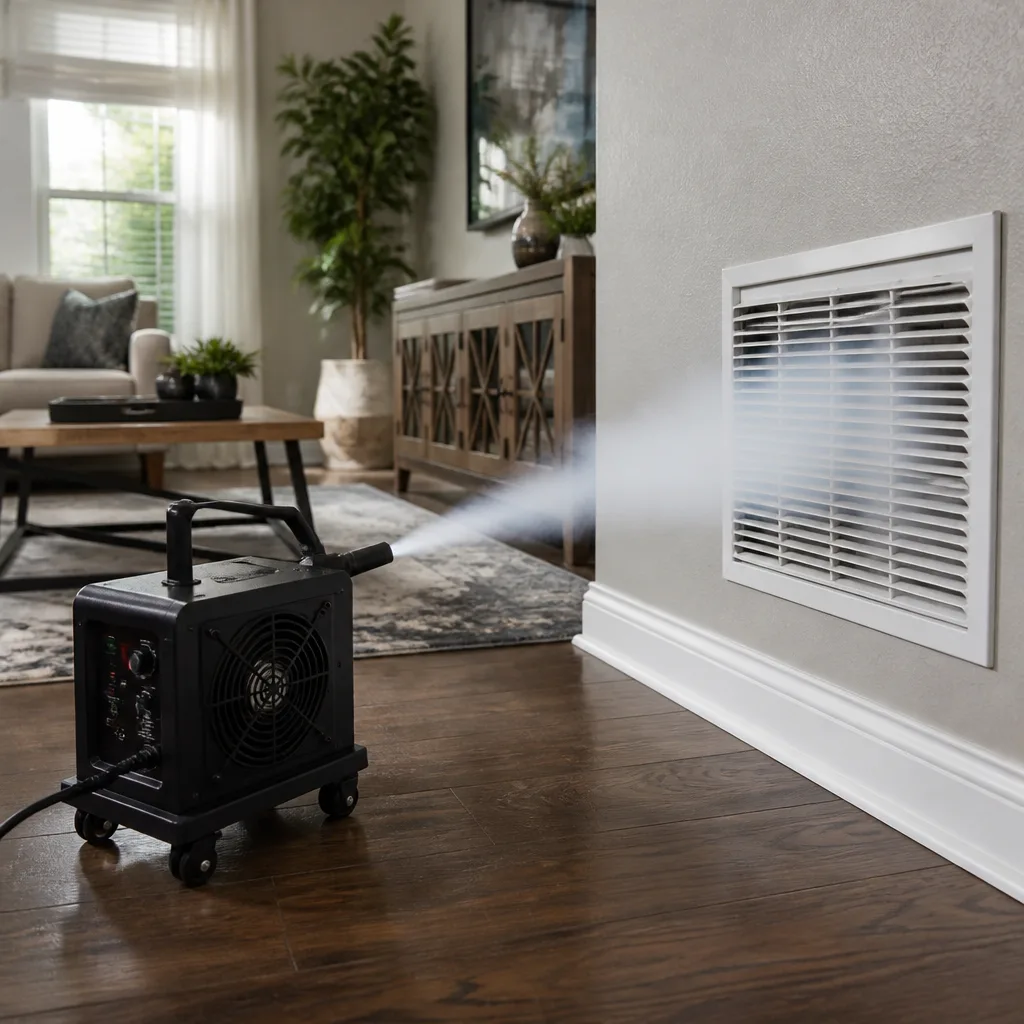 Sanitizing & deodorizing
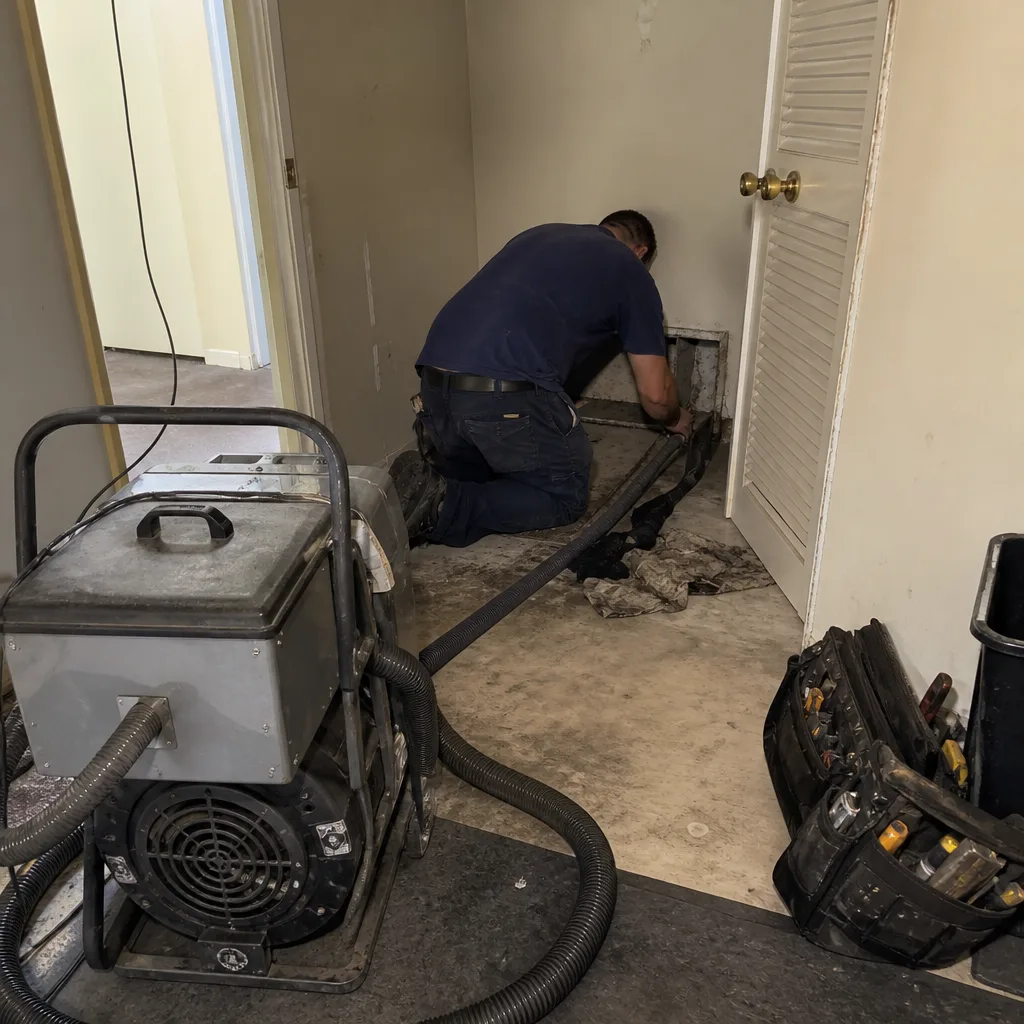
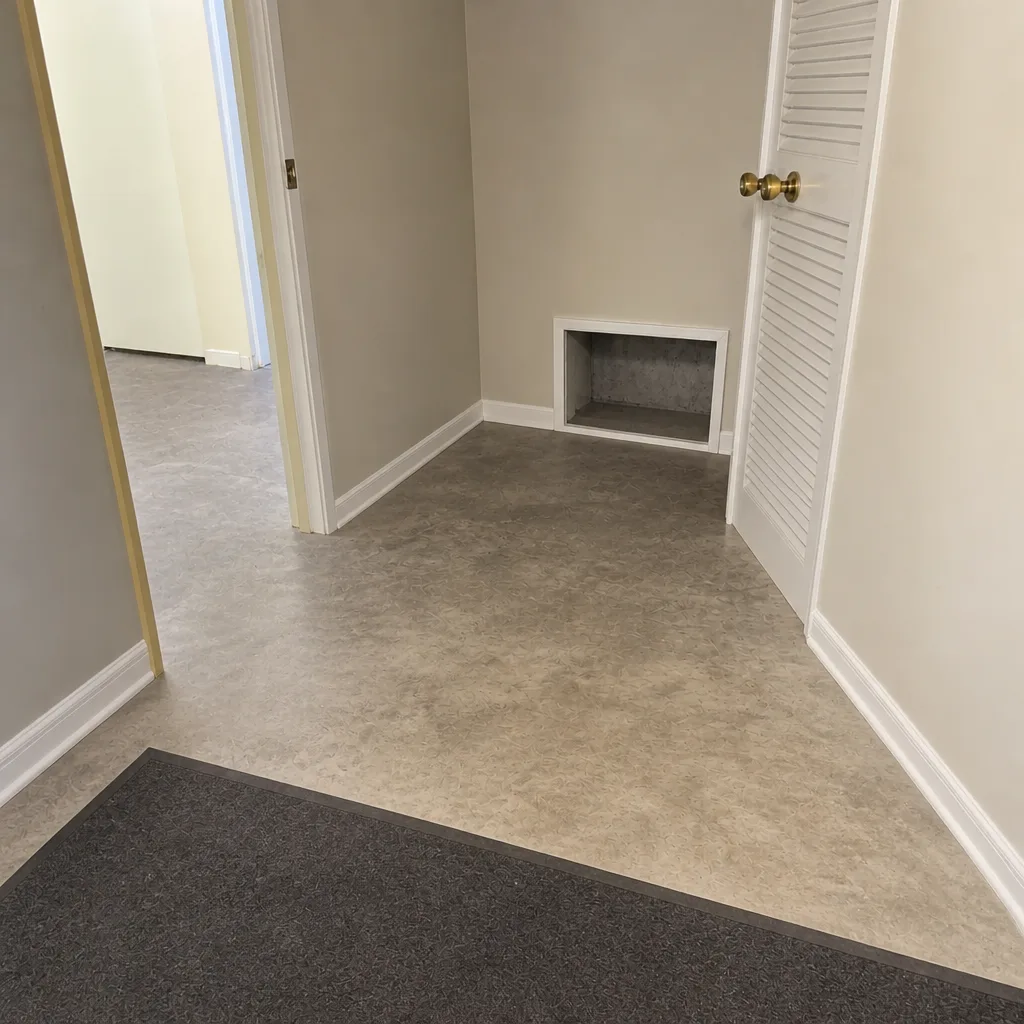
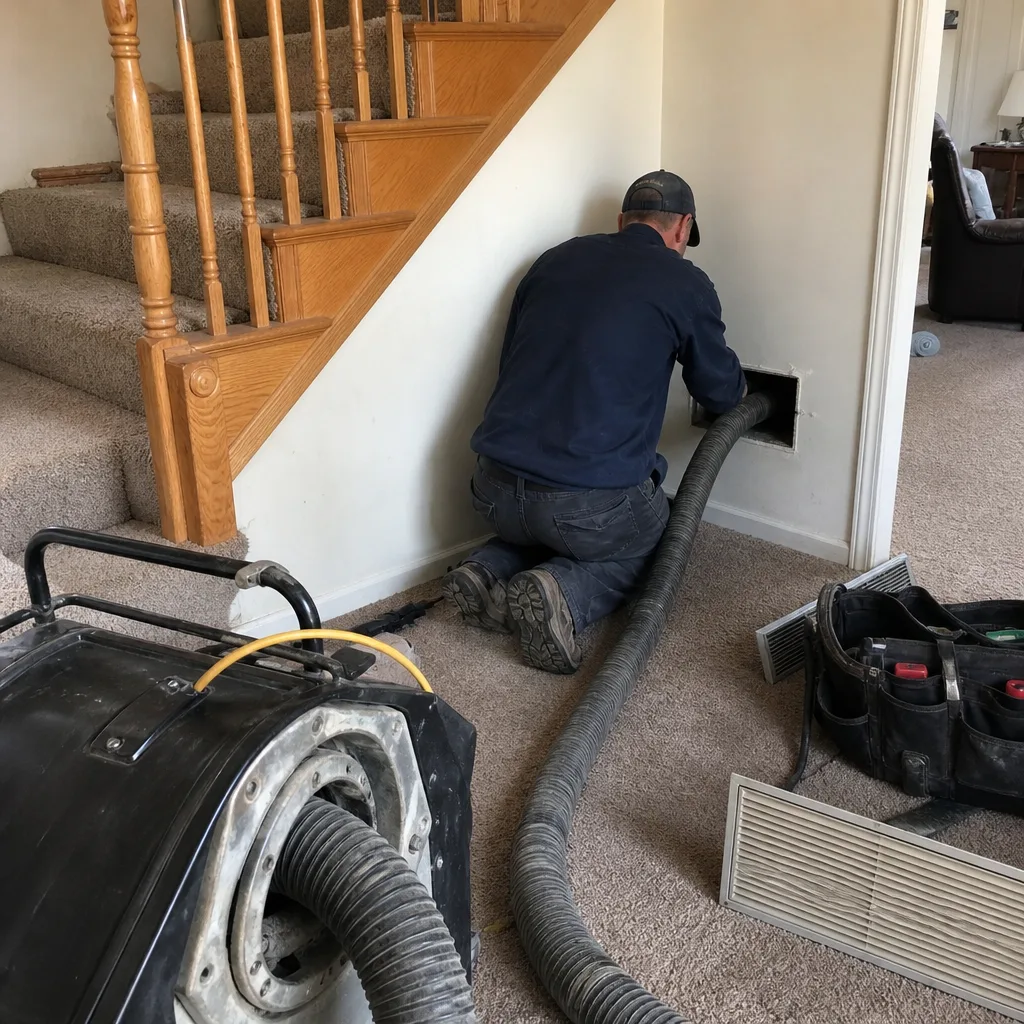
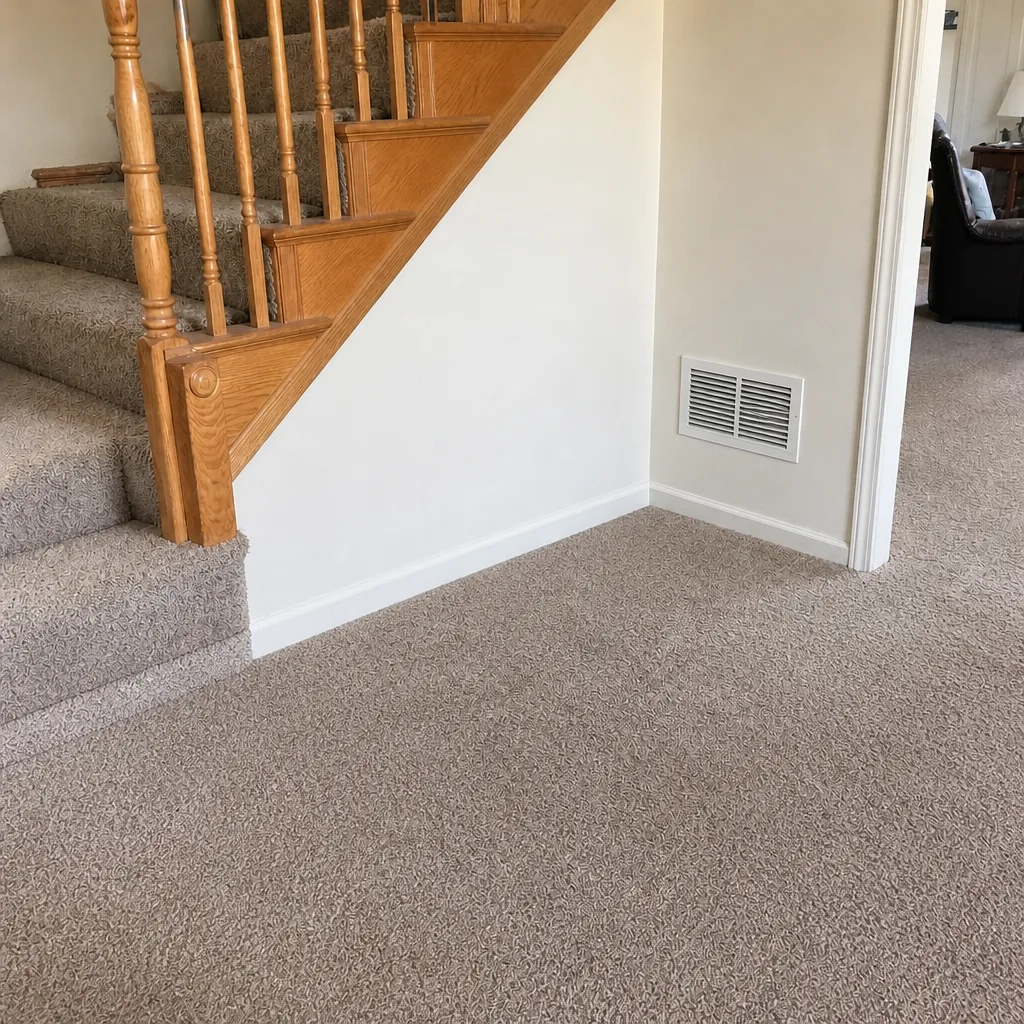
Whole-system duct and dryer vent check with before-and-after photos - you see exactly what came out of your vents
That "$99 whole-house special" is a bait ad - the real number appears once they are in your hallway, or the "clean" is a shop-vac at the register. We photograph the inside of your ducts before and after instead.
Air Duct Cleaning Warning Signs: A Colorado Springs Homeowner’s Reference Guide
Most homeowners judge their ducts by what they can see: dust puffing from a register, a dark ring around a vent cover, visible debris after a remodel. Those are real signals, but they show up late. The warning signs that tell an experienced technician a system needs attention usually register much earlier, and they tend to be things you feel and hear rather than see. In Colorado Springs, the housing stock makes this especially relevant. This city grew through several distinct building booms, and each era left behind ductwork with its own habits and weak points. This guide covers the subtle indicators we look for, the visual checks a homeowner can do without tools, and how to tell when a warning sign means “clean this” versus “repair this.”
Quick Answer
Air duct warning signs in Colorado Springs usually show up as uneven room temperatures, a musty smell at the start of heating season, weak airflow from far registers, or visible flex duct sagging at connections. Dust at the vents is one indicator, but temperature and pressure imbalance, odor, and duct integrity problems are the earlier and more useful signals. If you notice several of these together, the system needs an inspection, and the fix may be cleaning, repair, or both.
Styles & brands we work with
- Whole-home duct cleaning
- Dryer vent cleaning
- Camera inspection
- Sanitizing & deodorizing
Table of Contents
- Why Temperature Imbalance Is the First Warning Sign
- What Musty Odor After Heating Season Startup Signals
- Visual Inspection Points Any Homeowner Can Check
- Warning Signs by Colorado Springs Construction Era
- Cleaning Versus Repair: How to Tell the Difference
- Pressure and Airflow Signals You Can Test
- Colorado Springs Seasonal Patterns Worth Knowing
- What a Professional Duct Inspection Covers
Why Temperature Imbalance Is the First Warning Sign
The most telling warning sign that your ducts need professional attention usually isn’t visible dust. It’s a persistent difference in temperature from room to room, often 15% or more, that your HVAC company keeps attributing to normal system behavior. If the upstairs bedrooms run noticeably hotter or colder than the main floor, and the pattern holds across seasons, you’re not looking at a thermostat problem. You’re looking at a distribution problem, and distribution is a duct issue before it’s anything else.
The mechanism is straightforward. Every forced-air system is designed around specific static pressure: the resistance the blower has to push against to deliver air evenly. When a run of flex duct is crushed, kinked, or separated at a fitting, the air that should reach the far side of the house gets rerouted. The rooms closest to the plenum get too much air, the rooms at the end of the longest run get too little, and the thermostat reads an average that satisfies nobody.
Colorado Springs homes sit at altitude, and that matters more than most homeowners realize. Air is thinner here, which means the blower has to work with less dense air to deliver the same volume. Systems that were marginal to begin with have less margin to give up when a duct gets pinched by a joist, crushed under stored boxes, or collapsed at a takeoff. In our work around Colorado Springs, we find flex duct that’s been sagging since installation more often than we find duct with a single obvious tear.
What to watch for:
- A consistent 15% or more temperature gap between the room nearest the furnace and the room farthest from it
- Rooms that never quite heat or cool no matter how the thermostat is set
- An HVAC contractor pointing repeatedly to “normal system behavior” while the gap persists
- Airflow that feels strong at the registers near the equipment and weak at the outer ends
If two or more of those are true, the temperature imbalance is your first clue, and an air duct cleaning inspection is the right next step, because the technician will check duct integrity at the same time.
What Musty Odor After Heating Season Startup Signals
A musty smell during the first weeks of heating season is one of the most specific warning signs a duct system gives, and it points at a particular set of causes. The odor shows up when the furnace fires after months of dormancy. It’s the smell of the heat exchanger warming dust, and in older or humidified systems, it’s often the smell of something organic that has been sitting in the duct path through the cooling season. In Colorado Springs, crawlspace and basement duct routing makes this pattern common, because a low run of duct in a cool, damp foundation space becomes a condensing surface once the cooling season begins.
Colorado Springs summers are dry on the surface and often damp underneath. A crawlspace doesn’t follow the surface. Cooled air running through a low trunk duct in July and August pulls moisture toward that duct, and any organic dust that has accumulated inside can bloom. By the time the furnace comes on in fall, the smell is baked in. The heat doesn’t create the problem; it reveals it.
Here’s how an experienced technician separates the causes:
- Confirm the smell is duct-borne. A musty odor that appears only when the blower runs, and fades a few minutes after it stops, is coming through the ducts. A smell that lingers regardless is more likely in the conditioned space itself.
- Check the air handler and coil. A wet evaporator coil is a common source. The coil needs to be part of the inspection, not just the ducts.
- Inspect the low runs first. If the system has basement or crawlspace trunk duct, that’s where the odor is most likely to originate.
- Look at the humidifier if you have one. A Honeywell or Aprilaire humidifier that has run through a season without attention can introduce its own musty signature. Those systems need to be checked as part of the inspection rather than assumed clean.
- Test airflow at the return. Weak return draw keeps the whole system in a state of recirculation that makes odor worse.
Odor is a signal, not a verdict. The inspection tells you whether the source is duct debris, a wet coil, or a crawlspace humidity issue, and those three need different responses.
Visual Inspection Points Any Homeowner Can Check
You don’t need tools to spot half the warning signs a technician would flag. A flashlight and a few minutes at your registers will tell you more than you’d expect, and the check is safe to do. What matters is knowing which details are meaningful and which are just surface cosmetic wear.
Start with the registers themselves. A dark ring around the perimeter of a supply register isn’t just dust settling on the cover. It’s a sign that the register is drawing air backward around the boot, which points at a pressure imbalance in that room. A ring that keeps returning within a few weeks of wiping it down is a stronger version of the same signal, because it means air is moving the wrong way past the fitting.
Then look at what you can see of the ductwork. In a Colorado Springs home with an unfinished basement or attic access, you can see a good portion of the flex duct runs without opening anything up. What to look for:
- Sag at connections. Flex duct should leave each takeoff with a taut transition. A visible droop at the collar where the inner liner meets the boot is a common and quiet airflow restriction.
- Inner liner exposed. If you can see the internal lining at a connection rather than a clean outer jacket cinched over the fitting, the duct is not sealed and is losing air to the joist space.
- Crushed sections. A flex run that’s been pinched flat under a beam, a duct chase, or stored boxes is delivering a fraction of its intended air.
- Return grille restriction. A return grille that is partly blocked by furniture, a rug, or a storage shelf is pulling harder than it should through the gaps. This alone can raise the pressure the blower has to work against.
- Duct board edges. On older duct board systems, look at the tape seams and edges. Lifted tape and fuzzy seams mean the board itself is beginning to fail.
Any single item is worth noting. Two or more, especially combined with a temperature imbalance or musty odor, is a strong argument for scheduling a professional inspection of the ducts in your Colorado Springs home.
Warning Signs by Colorado Springs Construction Era
Duct problems often follow the decade. Colorado Springs grew heavily through several distinct construction periods, and each one left behind duct systems with predictable weak points. Knowing your home’s era tells a technician where to look first.
1970s homes with duct board. Duct board trunk systems from this era were designed to be sealed with mastic and tape at every joint and takeoff. When that seal ages out, the system leaks steadily into unconditioned space. The warning sign is a return that feels weak while the supply registers near the plenum feel strong, because air is escaping before it ever reaches the room. Duct board that has absorbed moisture over the years can also begin to break down internally, and that’s a cleaning-plus-repair situation rather than a cleaning-only job.
1990s tract homes with undersized returns. A large share of Colorado Springs’ tract housing from this period was built with a single central return, and that return was often sized to the minimum the code at the time would allow. The warning sign is a system that runs long cycles, feels noisy at the return, and never quite balances the two floors. Undersized returns create constant resistance, which raises pressure and makes every other weakness in the system worse. Cleaning helps, and a repair that improves the return side often does more for comfort than any single cleaning can.
2000s builds with long flex duct runs. Flex duct is efficient to install and easy to run through long attic and crawlspace spans, which is exactly what happened during the region’s expansion through the 2000s. The problem is that flex duct is also easy to crush and hard to inspect once it’s up in the joist bays. The warning sign in these homes is the far room that gets dramatically less airflow than the near room, combined with flex you can see from an attic hatch that’s been pinched or pulled tight at a bend. Long runs also accumulate more dust per foot of duct, so a cleaning schedule based on the length of the run rather than a generic number makes more sense.
A trained technician reads the build era before opening anything up. That’s one of the reasons we ask about the home before we start on ductwork in Colorado Springs. If you don’t know what you’re looking at, a whole-system inspection from Flagship Air Duct Cleaning gives you a clear picture of both the condition and the right response.
Cleaning Versus Repair: How to Tell the Difference
This is where warning-sign guides most often fall short. A visible pile of dust means cleaning. A crushed or separated flex run means repair. Cleaning alone won’t fix a duct integrity problem, and repairing a system full of debris just puts the debris back into circulation. The distinction matters because the wrong answer costs money twice.
The clearest way to sort it: cleaning removes what’s inside the duct. Repair fixes the duct itself so the inside of it stays clean. If a warning sign is about what’s moving through the duct, it’s a cleaning issue. If it’s about the duct not doing its job structurally, it’s a repair issue.
Here’s how that plays out in practice:
- Cleaning is the right answer when: registers show a dust ring that returns over months, the air handler and coil are sound, flex runs are taped and sealed, and the system is intact. The dust is there because it accumulated, not because it’s being drawn in.
- Repair is the right answer when: a flex run is crushed, a takeoff has separated from the trunk, inner liner is exposed at a fitting, duct board seams are failing, or a return is so undersized it’s choking the system. The warning sign points at structural failure, not accumulation.
- Both are the right answer when: a system has accumulated debris and is also leaking or restricted. That’s common in older Colorado Springs ductwork, and the order matters. Seal and repair first, then clean, or the cleaning is undone the moment the system runs again.
That dual capability is why we keep cleaning and repair under one roof. We clean it. If we find damage, we fix it, and you don’t need a second company to circulate back through the schedule. Our technicians have up to 9 years of experience, and we use professional-grade equipment from Rotobrush and Nikro rather than consumer vacuums dressed up as commercial tools. That matters most on the repair side, because a proper job begins with real inspection. If the initial inspection finds a structural problem, that’s the moment to stop and address it correctly.
If your dryer vent shows the same structural weakness, we handle dryer vent cleaning as a fire-prevention service rather than an add-on, because a crushed or clogged vent is a different kind of warning sign altogether.
Pressure and Airflow Signals You Can Test
You can test your own system’s airflow without any instruments, and the two-minute version is more diagnostic than you’d think.
- The tissue test at the register. Hold a single tissue against a supply register with the system running. It should move and hold. Repeat at every register in the home. Note where the draw is strong and where it’s weak. The pattern, not the individual readings, is the signal.
- The return draw test. Open the return grille and hold a tissue near the filter. If the draw feels weak or fades noticeably within seconds, the return side is restricted.
- The door-swing test. Close a room door with the system running. If the door pulls itself open or shut with surprising force, that room has a pressure imbalance. It’s one of the clearest signs a supply or return on that run isn’t doing its job.
- The dust test. Wipe a supply register cover and a return grille cover with a white cloth. Both will pick up some dust. What to note is the color and consistency. Fairly uniform light dust is normal. A heavier, greasier, or dark layer, especially after a recent cleaning, is a signal.
- The sweep test. Walk into each room with the system running and feel the register with your hand. The difference in pressure between rooms should feel modest. A room where the supply barely moves air, or feels like it’s pulling inward, needs attention.
None of these tests tells you what’s inside the duct. They tell you where the system is struggling, which is exactly the information a technician needs to plan the inspection. If you’re not sure how to read what you found, look at the previous callout: a 15% or more gap between the near and far rooms is the answer, and the smart move is to get the system looked at by a specialist working in Colorado Springs.
Colorado Springs Seasonal Patterns Worth Knowing
The warning signs your ducts give in Colorado Springs don’t arrive evenly across the year. They cluster into two seasons, and knowing when to look helps you spot problems before they compound.
The first cluster is the transition into heating season. The furnace fires for the first time in months, the heat exchanger warms months of accumulated dust, and any musty odor from the crawlspace or basement routing becomes suddenly obvious. It’s also when the temperature imbalance between near and far rooms becomes most noticeable, because heating a room with weak airflow is harder to mask than cooling it. That’s the moment to schedule a duct inspection for your Colorado Springs home, before the heating season is in full swing and every HVAC company is booked out.
The second cluster is the end of the cooling season. Damp conditions in crawlspace and basement trunk duct have had months to develop, and the point just before the transition is when an inspection is most useful. That gives you time to address cleaning and repair before the furnace comes on and spreads the problem into living space.
The two seasons bracket the same problem from different directions, and the fix is the same. What changes is the urgency. A musty odor at heating startup is uncomfortable. A musty odor that stays through the winter can mean moisture is lingering in the system all season, and that’s a stronger reason to inspect early. If you’re not sure which season you’re in for your home, a call to a specialist working in Colorado Springs sorts it in a few minutes.
What a Professional Duct Inspection Covers
A real inspection is not a free ten-minute look from the register. What a thorough inspection covers is the whole system, from the air handler to the last register, and it’s the step that separates a duct specialist from a duct cleaner.
Here’s what a proper inspection involves:
- Visual inspection of accessible duct runs. Every run that can be reached is checked for crushed sections, disconnected joints, exposed inner liner, and failing duct board.
- Air handler and coil check. The source of airflow matters as much as the ducts. A dirty coil or failing filter compromises everything downstream.
- Return side check. The return is half the system, and it’s the half most homeowners never look at. An undersized or restricted return distorts every pressure reading the system makes.
- Filter state and type. A filter that is too restrictive is a return problem disguised as a cleaning problem. It gets flagged and corrected.
- IAQ system compatibility. If the home has a Honeywell, Aprilaire, Abatement Technologies, or Guardsman setup, the inspection accounts for it rather than working around it.
- Before-and-after photos. A thorough service documents what it found and what it left. Photos of your own ducts, not stock images, are the clearest proof the work happened.
What the inspection produces is either a cleaning recommendation, a repair recommendation, or both, with a clear reason for each. It also produces a flat price per system, agreed before any work starts. That’s a deliberate choice, and it’s the direct answer to the bait-and-switch reputation this industry has earned. A coupon price that turns into a larger invoice once the technician is on site isn’t a discount. It’s a different service than the one you thought you hired. A price agreed before work starts, on a full-system basis, is the alternative.
If you have questions about what a full inspection of your Colorado Springs ductwork would involve, the right next step is to talk it through rather than guess. That’s what Colorado Springs homeowners do when they want a straight answer about their duct system.
Common Mistakes to Avoid
- Assuming visible dust is the only sign. Dust at a register is real, but it’s one of the later signals. Weak airflow, a temperature gap between near and far rooms, and musty odor after heating season are earlier, and more useful, indicators in Colorado Springs homes.
- Calling a coupon-driven service and expecting a real inspection. Deep pricing often arrives after the technician is on site, and it often arrives with a recommendation to fix something that wasn’t part of the original conversation. A flat price per system agreed before work is a different arrangement, and it’s worth asking for one.
- Cleaning a system with a structural problem. Cleaning a crushed or separated duct system doesn’t solve anything. Seal and repair first, then clean, or the cleaning is undone within a heating cycle.
- Ignoring an undersized return because the supply side “seems fine.” A weak return is one of the most common warning signs in Colorado Springs track housing from the 1990s, and it quietly raises your heating and cooling costs.
- Getting filter recommendation wrong. A filter that’s too restrictive acts like a blocked return. It’s a common and easy-to-correct cause of a temperature imbalance that gets blamed on the ducts.
- Letting a dryer vent go without inspection. A clogged dryer vent is a fire risk that a lot of duct companies skip, and in a crawlspace-heavy Colorado Springs home it’s often the most dangerous vent in the house.
- Skipping the before-and-after photos. Ask for photos of your own system, and be wary of a service that won’t provide them. It’s the simplest way to know the work was actually done.
See the difference
 Before
 After
 Before
 After
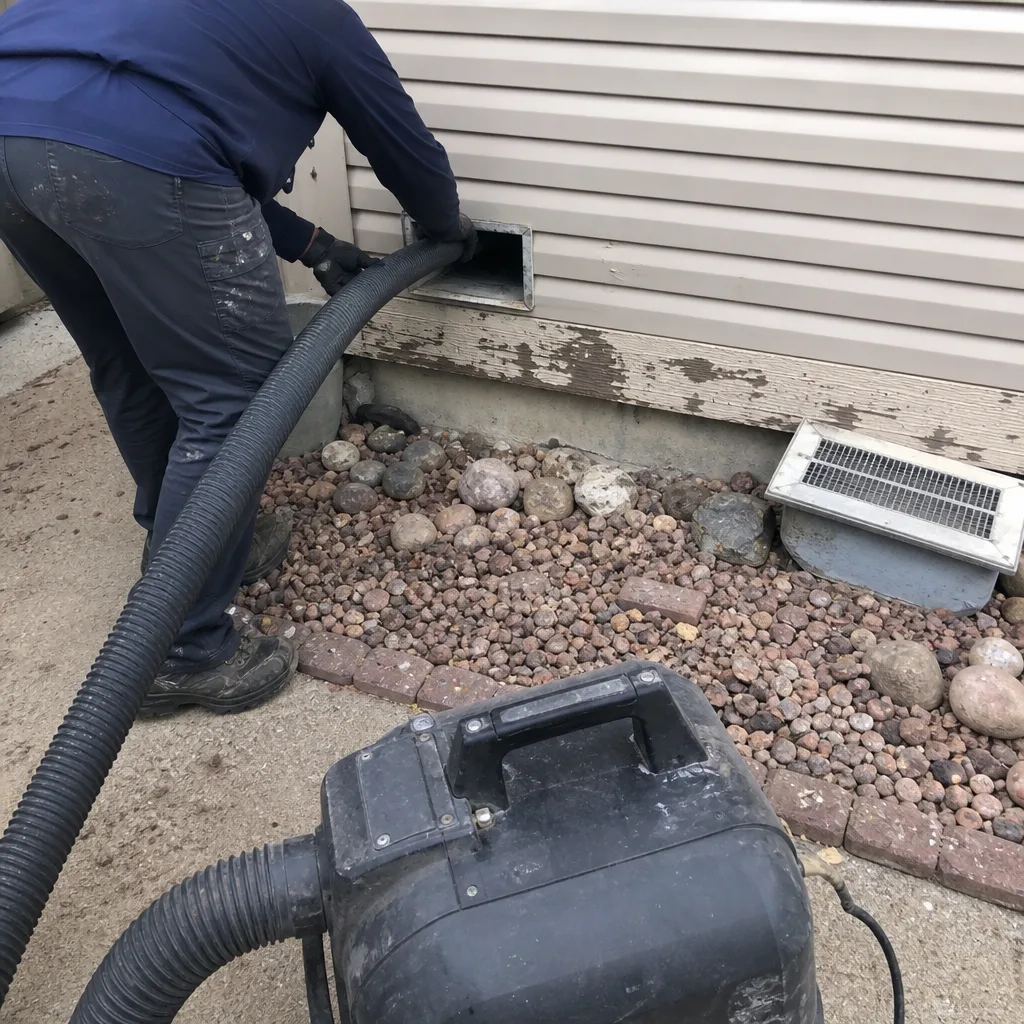 Before
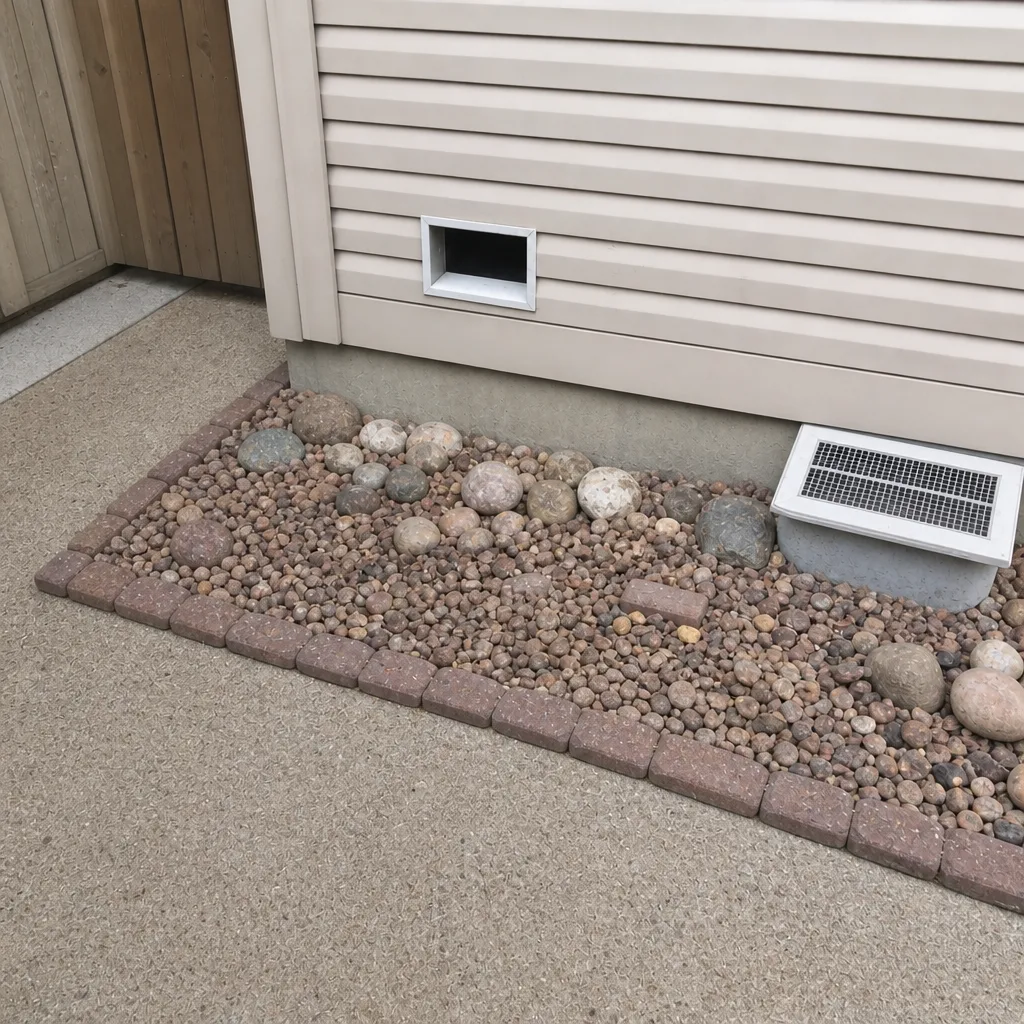 After
When to Call a Professional
Some warning signs can be assessed at home, and some should trigger a call the same day. Call a specialist now if you smell a musty odor when the heat runs, if a room registers a 15% or more temperature gap from the room nearest the furnace, if the return grille is weak even with a fresh filter, or if you’ve seen crushed flex duct at a connection. The same is true for a dryer vent that takes more than one cycle to dry a load. Airflow and duct integrity problem checks require equipment most homeowners don’t have, and the wrong fix from a non-specialist can make the problem worse. Flagship Air Duct Cleaning offers free estimates in Colorado Springs. Call (866) 293-3740. We answer 24/7. Fast dispatch from 7am to 7pm, Sunday through Friday.
Frequently Asked Questions
Most Colorado Springs homes benefit from an inspection every few years, with cleaning scheduled based on what the inspection finds, not on a calendar. Homes with long flex runs, pets, recent remodeling, or a return system that needs attention usually justify more frequent cleaning, while a well-sealed newer system can go longer. The honest answer is that condition matters more than age, and the inspection tells you which one you’re looking at. Call (866) 293-3740 for an exact quote. Estimates are free.
Air duct cleaning in Colorado Springs is typically priced per system rather than per vent, with most residential cleanings landing in the range of several hundred dollars and cleanings that include repair work landing higher. The written estimate sets the final price, and it’s agreed before work starts. The number that matters is the flat price for your system, not a teaser coupon. Call (866) 293-3740 for an exact quote. Estimates are free.
Cheap quotes are usually cheap because they’re designed to be upsold once a technician is inside the home. A low per-vent or coupon price often leads to a much larger invoice for work the homeowner never intended to buy. The alternative is a flat price per system agreed before work begins, with photos of your own ducts before and after, so you can see exactly what you paid for. Call (866) 293-3740 for an exact quote. Estimates are free.
You know because you see before-and-after photos of your own duct system, not stock images. A thorough service documents what it found and what it left. We photograph the runs we clean, and we walk through what we found and repaired, including any flex duct or duct board fix that came up during the inspection. Call (866) 293-3740 for an exact quote. Estimates are free.
Sometimes, and sometimes not. A musty odor after heating season startup is often duct debris, which cleaning addresses directly. In Colorado Springs homes with crawlspace or basement duct routing, the same odor can point at a damp coil or humidifier, which needs its own inspection. A good inspection tells you which cause you’re looking at before any work starts. Call (866) 293-3740 for an exact quote. Estimates are free.
We repair it. Flex duct that’s crushed, pulled, or separated at a fitting gets corrected on the same visit, which is why we keep cleaning and air duct repair together under one provider. That means you don’t need a second company to come back out once the cleaning is done. Abatement Technologies equipment and Rotobrush and Nikro systems let us clean and verify the fix in the same visit. Call (866) 293-3740 for an exact quote. Estimates are free.
The Bottom Line
The warning signs that matter most in Colorado Springs ductwork are the earlier, quieter ones: a persistent room-to-room temperature gap, a musty odor at the start of heating season, weak return draw, and flex duct sagging at a connection. Dust at a register is real, but it’s late. The better move is to check the system’s pressure, temperature, and airflow and treat the results as your early-warning system. When a sign points to a structural problem, cleaning alone won’t fix it. A proper inspection, a flat price per system agreed before work starts, and photos of your own ducts are the standard worth holding a duct service to.
If you’re noticing several of the warning signs covered here, or you’re just not sure what you found, the next step is simple. Call Flagship Air Duct Cleaning at (866) 293-3740 for a free estimate. We answer 24/7. Fast dispatch from 7am to 7pm, Sunday through Friday. We clean it. If we find damage, we fix it. One flat price per system, agreed before work starts, with before-and-after photos of your own ducts.
Written by the team at Flagship Air Duct Cleaning.