
Last updated November 15, 2026
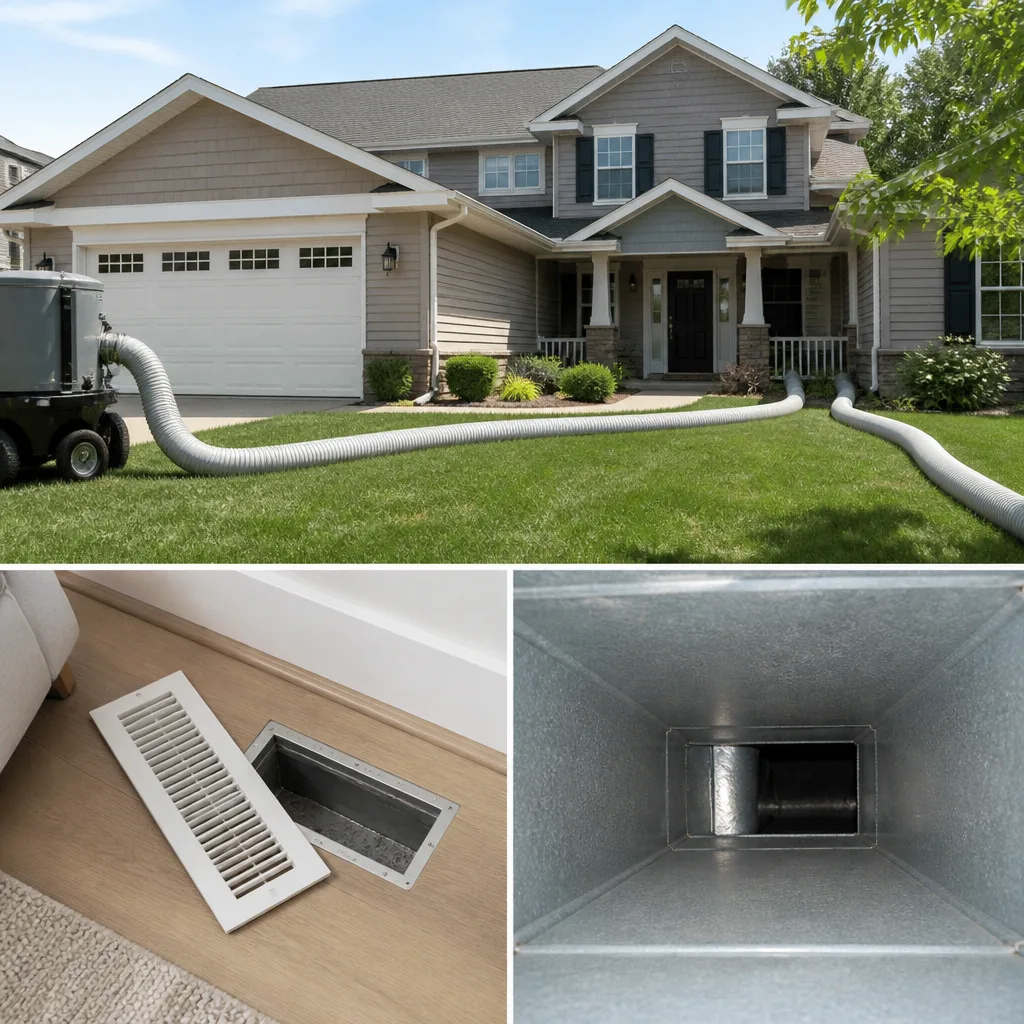 Whole-home duct cleaning
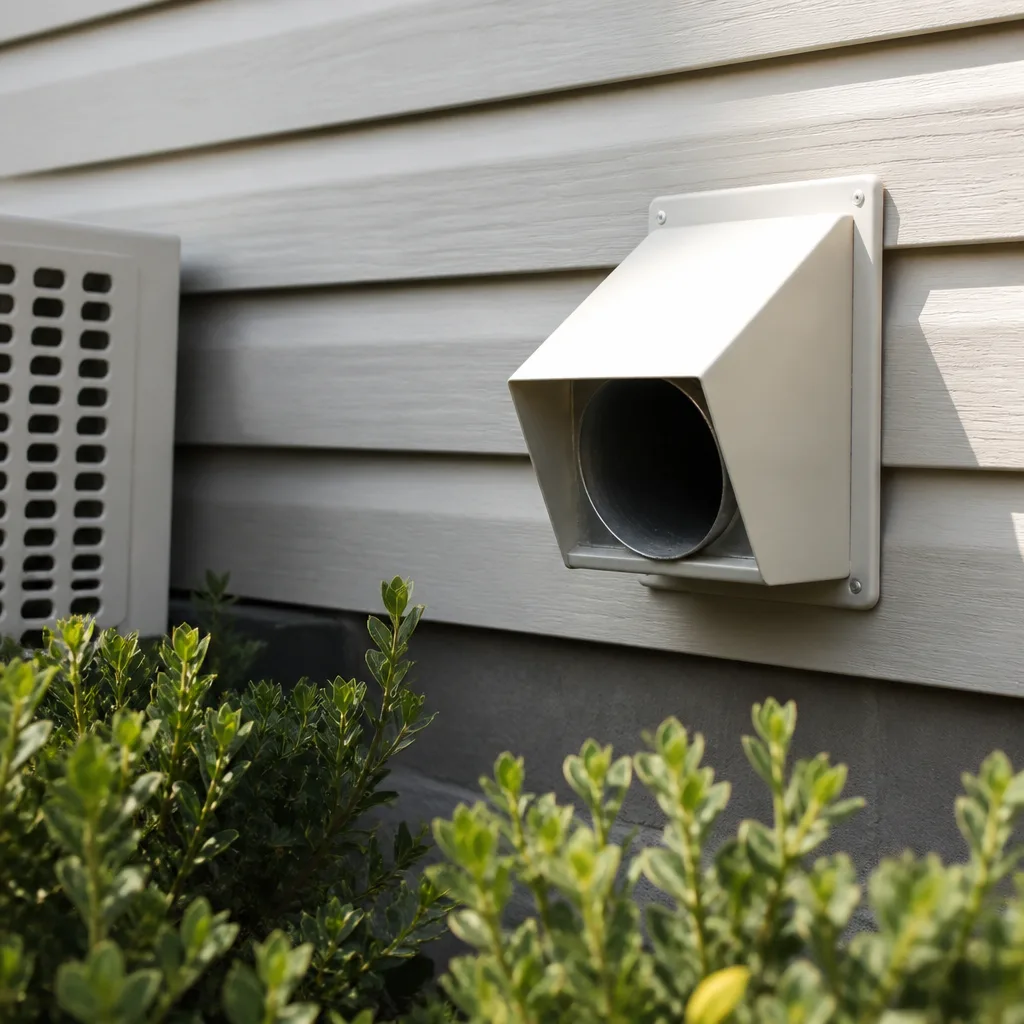 Dryer vent cleaning
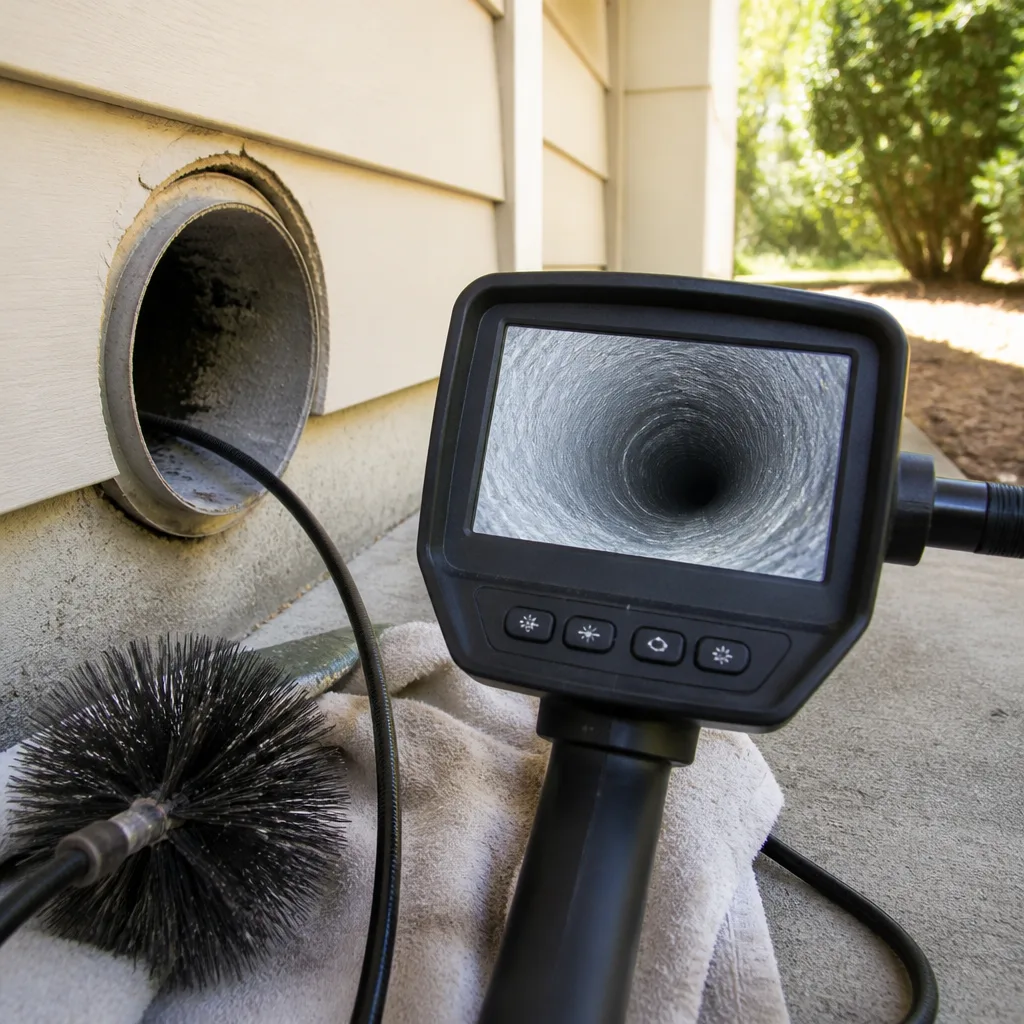 Camera inspection
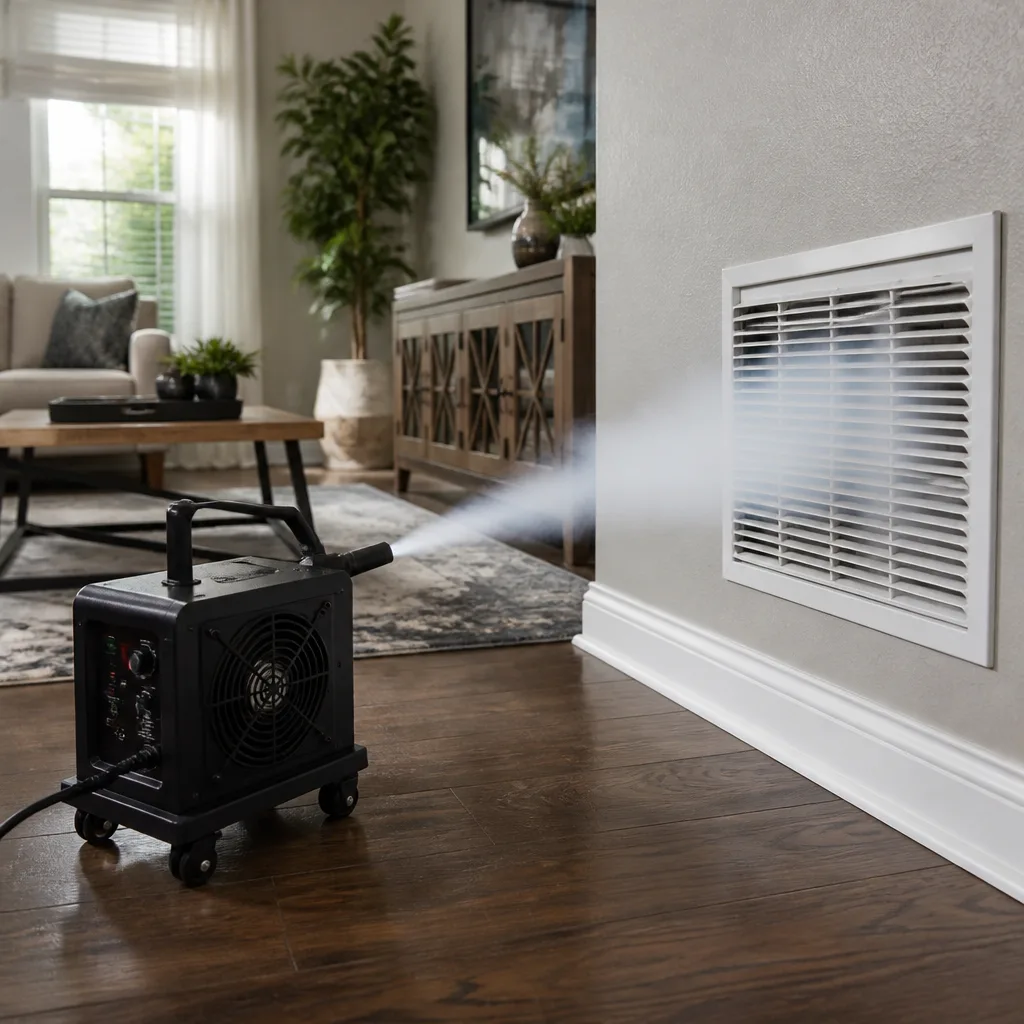 Sanitizing & deodorizing
Whole-system duct and dryer vent check with before-and-after photos - you see exactly what came out of your vents
That "$99 whole-house special" is a bait ad - the real number appears once they are in your hallway, or the "clean" is a shop-vac at the register. We photograph the inside of your ducts before and after instead.
The Complete Guide to Air Duct Cleaning in Colorado Springs
Most air duct cleaning guides were written for flat, humid climates, not a city that sits at 6,035 feet, borders the Front Range fire corridor, and swings 40 degrees in a single afternoon. That mismatch matters. Advice built for a sea-level suburb doesn’t account for the way thin air moves through a return duct here, or the red clay dust that rides in on a spring wind off the Palmer Divide. In this guide, we’ll explain what actually collects inside Colorado Springs ductwork, why altitude changes how your system performs, and what a real cleaning looks like compared to a quick pass with a vacuum wand. You’ll finish knowing how to judge a quote and when to ask for more than a brush.
Quick Answer
Air duct cleaning in Colorado Springs is a whole-system job that removes built-up dust, pollen, wildfire ash, and debris from your supply and return ducts using professional-grade negative-pressure equipment. At this altitude, thinner air and wide temperature swings push your blower harder, which pulls more particulate into the return side. A legitimate cleaning includes source removal, not just a surface wipe, and a good provider will also check for damaged or disconnected ductwork while they’re inside your system.
Styles & brands we work with
- Whole-home duct cleaning
- Dryer vent cleaning
- Camera inspection
- Sanitizing & deodorizing
Table of Contents
- How Colorado Springs’ Altitude Affects Your Ductwork
- What’s Actually Inside Colorado Springs Ducts
- Professional Equipment vs. a Shop Vac and a Brush
- How to Tell a Real Cleaning From a Visual Inspection
- Why Duct Repair and Sealing Belong in the Same Visit
- What a Full Cleaning Looks Like, Step by Step
- What Air Duct Cleaning Costs in Colorado Springs
- How Often You Really Need It
How Colorado Springs’ Altitude Affects Your Ductwork
At 6,035 feet, the air in Colorado Springs is noticeably thinner than what most HVAC systems were engineered against. That has real consequences for airflow. A blower rated for a certain cubic feet per minute at sea level moves less mass of air at altitude, so the system runs longer and harder to hit the thermostat setpoint. Longer run times mean more air cycling through your return ducts, and every cubic foot that passes through carries dust, pollen, and fine ash with it. Those particles settle on duct walls, and once a layer forms, the rough surface catches more of what follows.
The other altitude factor is temperature swing. A 40-degree shift in a single afternoon is ordinary here, especially in spring and fall. Your furnace and air conditioner trade off more often across a day than they would in a climate with a narrow temperature band, and each cycle stirs settled dust back into the airstream. Over a season, that cycling builds a fine coating on the return side first, because the return pulls from the whole house before the filter catches anything.
What this means for homeowners in Colorado Springs is that duct buildup tends to arrive with a specific signature: a visible gray film near return grilles, dust settling faster on horizontal surfaces right after the heat kicks on, and a musty note when the system first starts. Those are signs the ducts themselves are holding material, not just the rooms.
- Longer run times push more air (and more particulate) through the system each day.
- Wide temperature swings cycle the system more often, re-suspending settled dust.
- Return ducts build up first, which is why a whole-system evaluation matters more than a partial pass.
If you want to understand the full scope of what air duct cleaning involves in this climate, our service page breaks down the process in detail.
What’s Actually Inside Colorado Springs Ducts
Duct contents here are not generic house dust. The mix is distinctly local, and knowing what you’re dealing with helps you judge whether a cleaning addressed it. Three contaminants show up repeatedly in Colorado Springs homes:
Ponderosa pine pollen
The ponderosa pine is everywhere along the Front Range, and its pollen is heavy and abundant in spring. It doesn’t just coat your porch and windowsills. It gets pulled into the return system, and because pollen grains are sticky and slightly larger than ordinary dust, they cling to duct walls and accumulate rather than passing through. A filter catches some, but pollen that bypasses the filter or settles between cleanings ends up as part of the duct layer.
Wildfire ash infiltration
Colorado Springs sits near the Front Range fire corridor, and smoke-season ash is fine enough to slip past standard filters. Ash particles are tiny, irregular, and mildly alkaline, and they travel deep into the return side. When they accumulate, they contribute to that chalky residue you sometimes see at the base of return grilles. Smoke events draw attention to indoor air, but the material they leave behind can sit in the ducts long after the sky clears.
Red clay dust from the Palmer Divide
The soil around the Palmer Divide is a reddish, powdery clay that goes airborne easily on dry, windy days. It’s finer than typical topsoil dust and clings to surfaces. In a duct system, it settles into the joints, seams, and the low points of horizontal runs, which is exactly where a quick surface cleaning misses it.
Our technicians have up to 9 years of experience with these conditions, and the pattern is consistent enough to plan around: return ducts and the blower compartment routinely hold the heaviest loads, and the contaminants don’t behave the same way as ordinary household dust.
Professional Equipment vs. a Shop Vac and a Brush
A shop vac and a hand brush cannot clean a duct system, and it’s worth understanding exactly why so you can spot the difference on a quote. Consumer equipment works by suction at a single point, and it simply can’t move enough air volume to dislodge material clinging to duct walls hundreds of feet away around bends and elbows. What a shop vac does is stir up surface dust near the vent opening, and some of it ends up in the room.
Professional duct cleaning relies on two things working together: mechanical agitation to break material loose along the entire run, and continuous negative pressure to capture it. That’s what equipment from manufacturers like Rotobrush and Nikro is built to do. These are systems designed for the duct-cleaning trade, with rotating brush heads and high-volume vacuum units that combine agitation with containment. Abatement Technologies equipment is another industry-standard name we’re familiar with for air handling and containment work.
- Suction alone isn’t cleaning. You need agitation to reach the walls, seams, and joints where material accumulates.
- Containment matters. Negative pressure keeps what’s freed from blowing back into your living space.
- Reach matters. A hand tool can’t effectively clean deep runs or the far side of elbows.
- Professional systems are built for the job. Rotobrush and Nikro are designed specifically for residential and commercial ductwork.
When a company shows up with consumer-grade vacuums passed off as commercial tools, the cleaning will be shallow at best. Professional-grade equipment, not portable shop vacs, is the difference between a real cleaning and a surface pass. If you’ve got existing Flagship Air Duct Cleaning questions about what equipment is used on your home, ask before booking.
How to Tell a Real Cleaning From a Visual Inspection
This is where homeowners get burned, and it’s worth slowing down to get it right. A lot of cheap quotes are for a visual inspection with a vacuum wand near the registers, not a whole-system cleaning. The low price is real; the cleaning is not. Here’s how to tell the difference before you book.
- Ask what “whole-system” means in their quote. A real cleaning covers supply and return ducts, the blower compartment, and the air handler area where accessible. If the quote only mentions vents or registers, it’s not whole-system.
- Ask what equipment they use. If the answer is a shop vac and a brush, that’s a red flag. Professional systems from Rotobrush or Nikro are the standard.
- Ask whether they use negative pressure. A proper job uses contained negative pressure so debris doesn’t blow back into the house. If they can’t explain how they contain it, the cleaning isn’t contained.
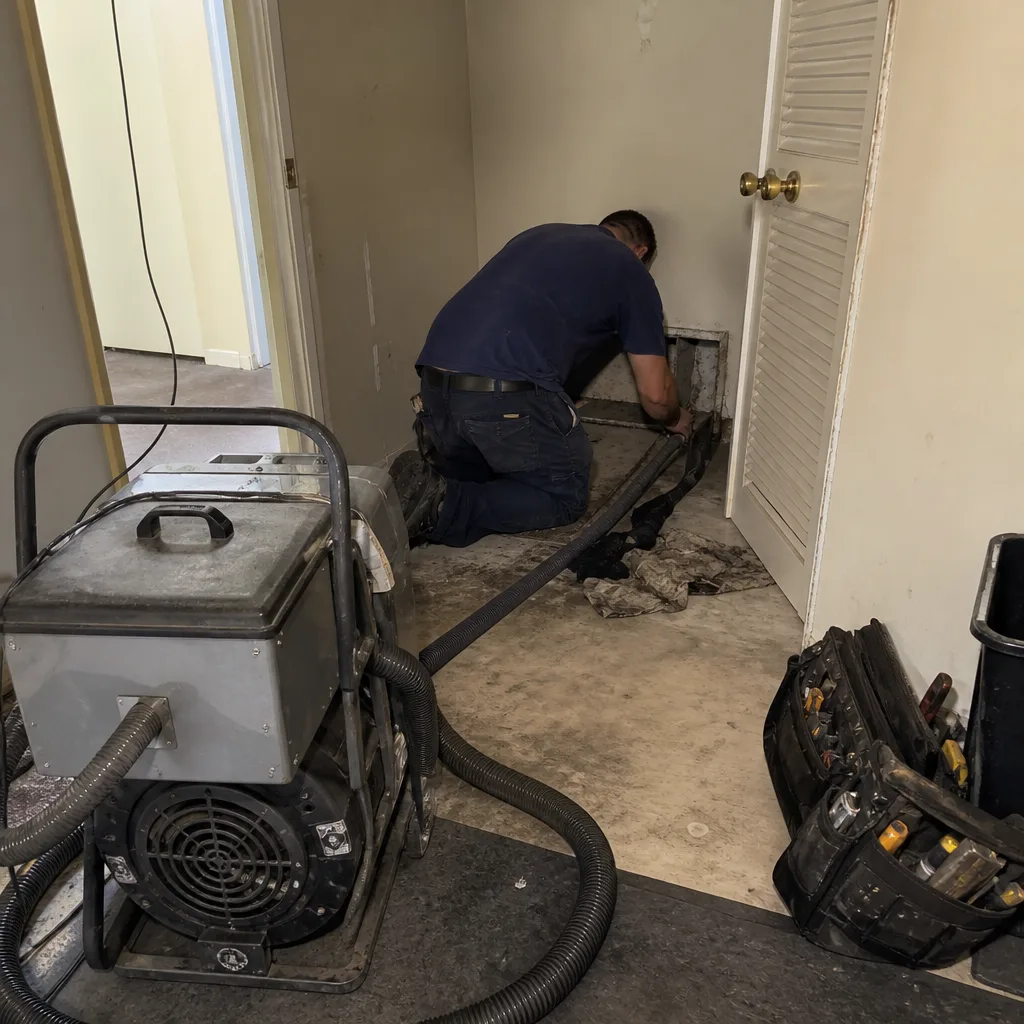
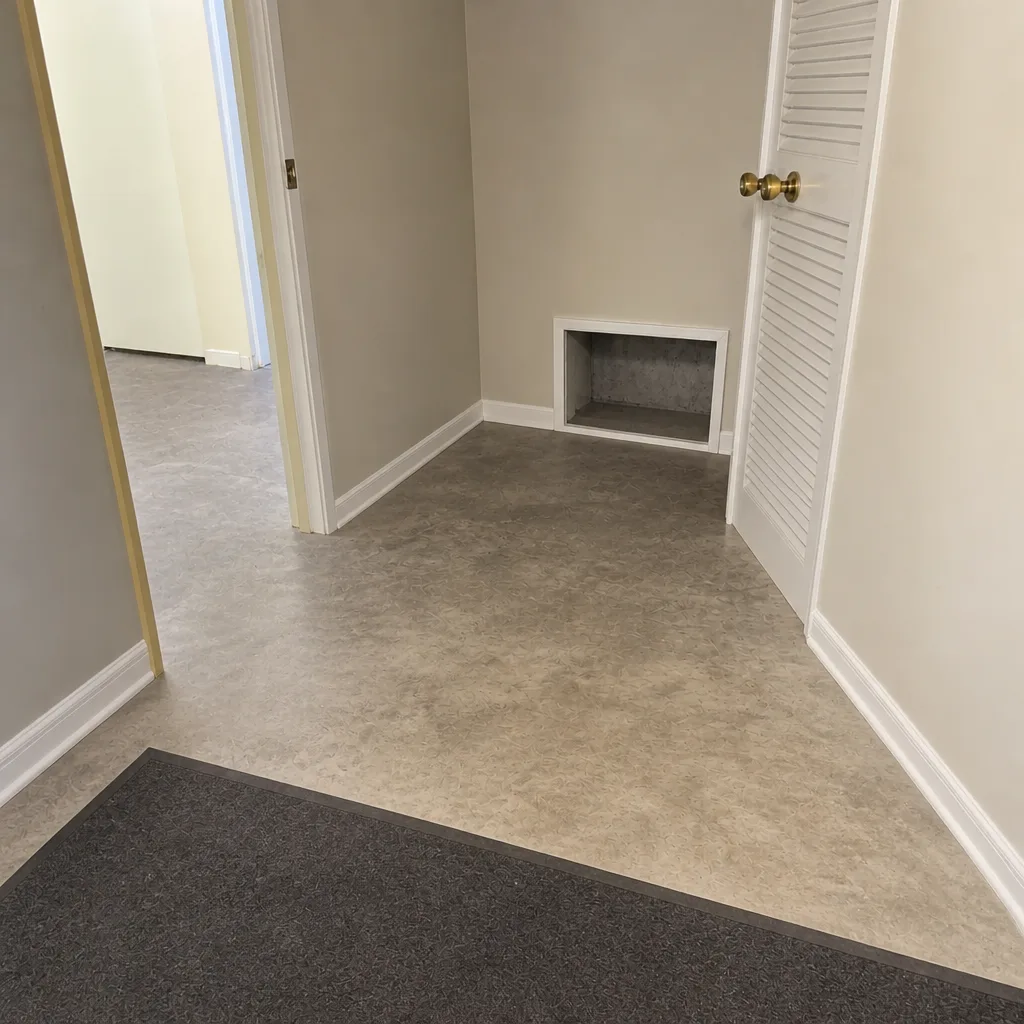
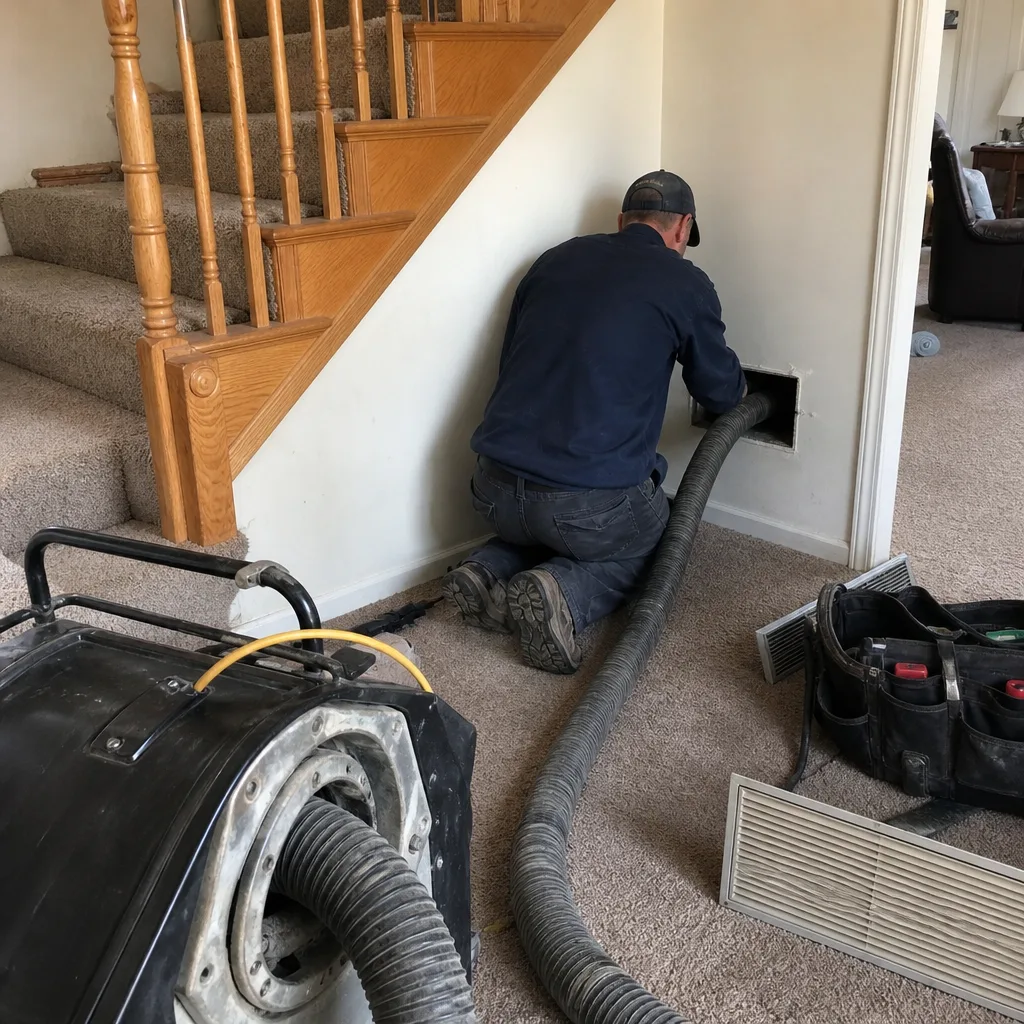
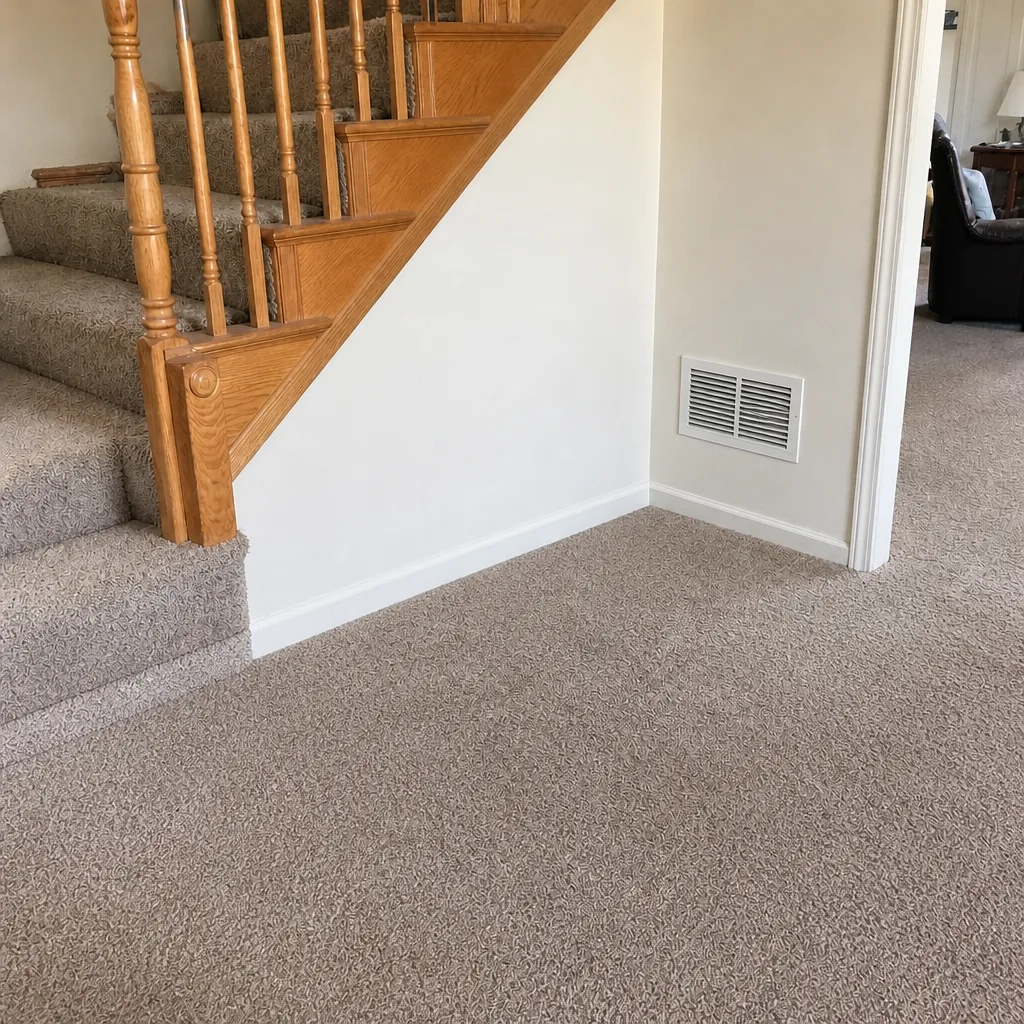
- Ask for before-and-after photos. A real cleaning can be documented. A visual inspection with a wand can’t show you what changed deep in the system.
- Ask about duct repair during the visit. A provider that only cleans and can’t evaluate damage is likely to leave you with a problem it found but can’t fix.
- Be wary of per-vent pricing. One flat price per system, agreed before work starts, is the honest way to quote. Per-vent pricing lets the total balloon once the technician is on site.
If a quote seems too good to be true, it usually is. Honest pricing is set per job, not per vent, and the written estimate should hold the final number.
Why Duct Repair and Sealing Belong in the Same Visit
Cleaning a duct system without inspecting it for damage is like detailing a car without checking the brakes. Duct problems are common and often invisible from the rooms: disconnected joints, crushed or collapsed sections, gaps at seams, and poor connections where flexible duct meets rigid pipe. In Colorado Springs, the wide temperature swings and dry air can work on duct connections over time, and problems that begin as a small gap grow worse as air escapes.
Leaky ducts waste energy and degrade air quality at the same time. Every gap in a supply run loses conditioned air to the attic or crawl space, and every gap in a return run can pull in dust, insulation fibers, or attic air before it ever reaches your filter. A cleaning that doesn’t evaluate the system for these problems can leave the real issue in place.
The efficient approach is to evaluate and repair in the same appointment. That means an inspection that covers:
- Accessible supply and return runs, checking for disconnected joints and crushed sections.
- Seams and connections, looking for gaps that leak air.
- The air handler and plenum area, where duct meets equipment.
- Existing IAQ components, so cleaning doesn’t damage or bypass Honeywell, Aprilaire, Abatement Technologies, or Guardsman systems already installed.
We clean it. If we find damage, we fix it. That’s why our service includes air duct repair rather than treating it as a referral to another company. Knowing that dryer vent cleaning is a separate safety service is also important; it’s a distinct fire-prevention job, not a bonus add-on to a duct cleaning.
What a Full Cleaning Looks Like, Step by Step
A proper cleaning follows a sequence, and knowing it helps you evaluate whether a job was done right. Here’s what a full cleaning involves, in order:
- Inspection and evaluation. Before any cleaning, the system is inspected to identify buildup, damage, and access points. This is where repair needs surface.
- Protection and setup. Floors and furnishings are protected, and negative-pressure containment is established at the air handler so debris is captured, not released.
- Agitation of supply and return runs. Rotating brush heads and high-volume equipment work through the supply and return ducts to break material loose along the walls, seams, and joints.
- Cleaning of the blower and air handler area. The blower compartment and accessible areas of the air handler are cleaned, since these hold heavy buildup at altitude.
- Capture and removal. Everything loosened by agitation is pulled into containment and removed from the home.
- Repair evaluation and completion. Any damage found during cleaning is documented and repaired, so the system is left sealed and functioning.
- Before-and-after documentation. Photos of your ducts show what changed, which is how you know the work was actually done.
The whole visit is scheduled around your day, and the price is agreed in writing before work starts. For an in-depth look at the process around the region, our Colorado Springs service area page explains how we approach homes here.
What Air Duct Cleaning Costs in Colorado Springs
Pricing for air duct cleaning in Colorado Springs varies with the size of the system and the condition of the ducts, and the honest way to quote is one flat price per system set by a written estimate. Here’s a snapshot of typical ranges homeowners see for a whole-system job:
- Standard residential duct cleaning (whole system): typically in the range of a few hundred dollars, with the exact figure set by the estimate.
- Larger or heavily-soiled systems: higher, since more runs and more buildup take more time and equipment.
- Duct repair or sealing, if needed: quoted separately based on what the inspection finds.
The estimate is free, and the written estimate sets the final price. Be cautious with quotes priced per vent, since those totals can climb quickly. A low coupon figure that becomes a far larger invoice is the industry’s most common bait-and-switch, and asking for a flat per-system price up front is the simplest way to avoid it. Call (866) 293-3740 for an exact quote; estimates are free.
How Often You Really Need It
There’s no single right answer for how often to clean ductwork, and anyone who gives you a fixed number without evaluating your home is guessing. In Colorado Springs, several local factors push the interval shorter than in a mild climate: heavy spring pine pollen, wildfire smoke events, and dry-season clay dust all load the system faster. Homes here often need attention more often than the generic every-few-years advice suggests.
The reliable approach is to watch for signals rather than follow a calendar:
- Visible dust at return grilles that returns soon after cleaning.
- A musty or stale smell when the system starts up.
- Dust settling faster on surfaces right after the heat or AC kicks on.
- Recent renovation, smoke event, or pest activity, all of which load the system quickly.
- Allergy season that hits harder indoors than out.
If any of these sound familiar, it’s worth a professional evaluation. An inspection tells you what your ductwork actually needs, rather than what a calendar says.
Common Mistakes to Avoid
- Hiring on price alone. A coupon-driven van with a shop vac will charge less and deliver a surface pass. Real cleaning takes professional equipment and time.
- Accepting per-vent pricing. It hides the total until the technician is on site. Insist on one flat price per system set in writing.
- Skipping the repair evaluation. Cleaning without inspection can leave disconnected joints and leaks in place, which wastes energy and lets contaminants back in.
- Ignoring dryer vent cleaning. The U.S. Fire Administration links clogged dryer vents to thousands of residential fires annually. It’s a separate safety job, not an afterthought.
- Damaging existing IAQ systems. If you have Honeywell, Aprilaire, or Guardsman components, a provider who isn’t familiar with them can damage or bypass the setup.
- Trusting a quote with no documentation. Without before-and-after photos of your own ducts, you have no way to confirm the work was done.
- Assuming altitude doesn’t matter. The thin-air, high-swing conditions in Colorado Springs load ducts differently than sea-level climates, and generic advice misses that.
See the difference
 Before
 After
 Before
 After
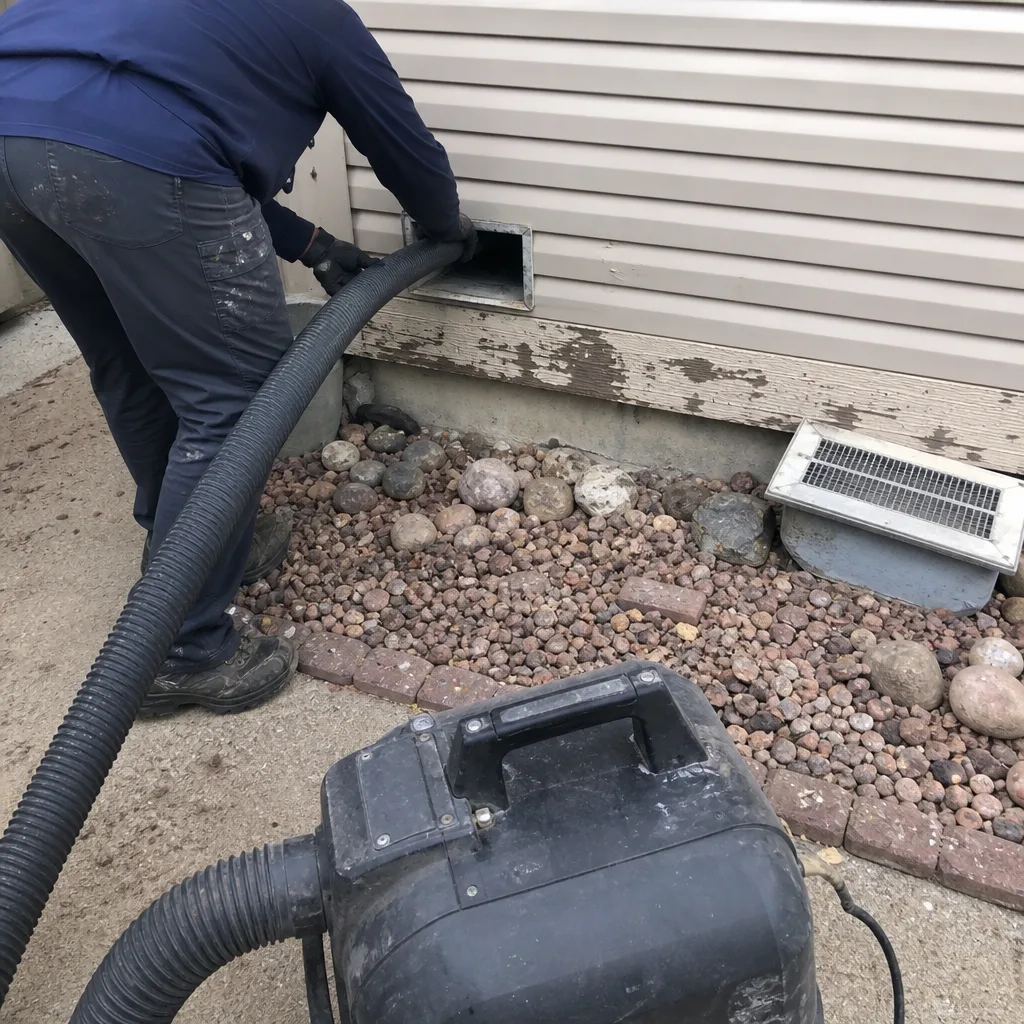 Before
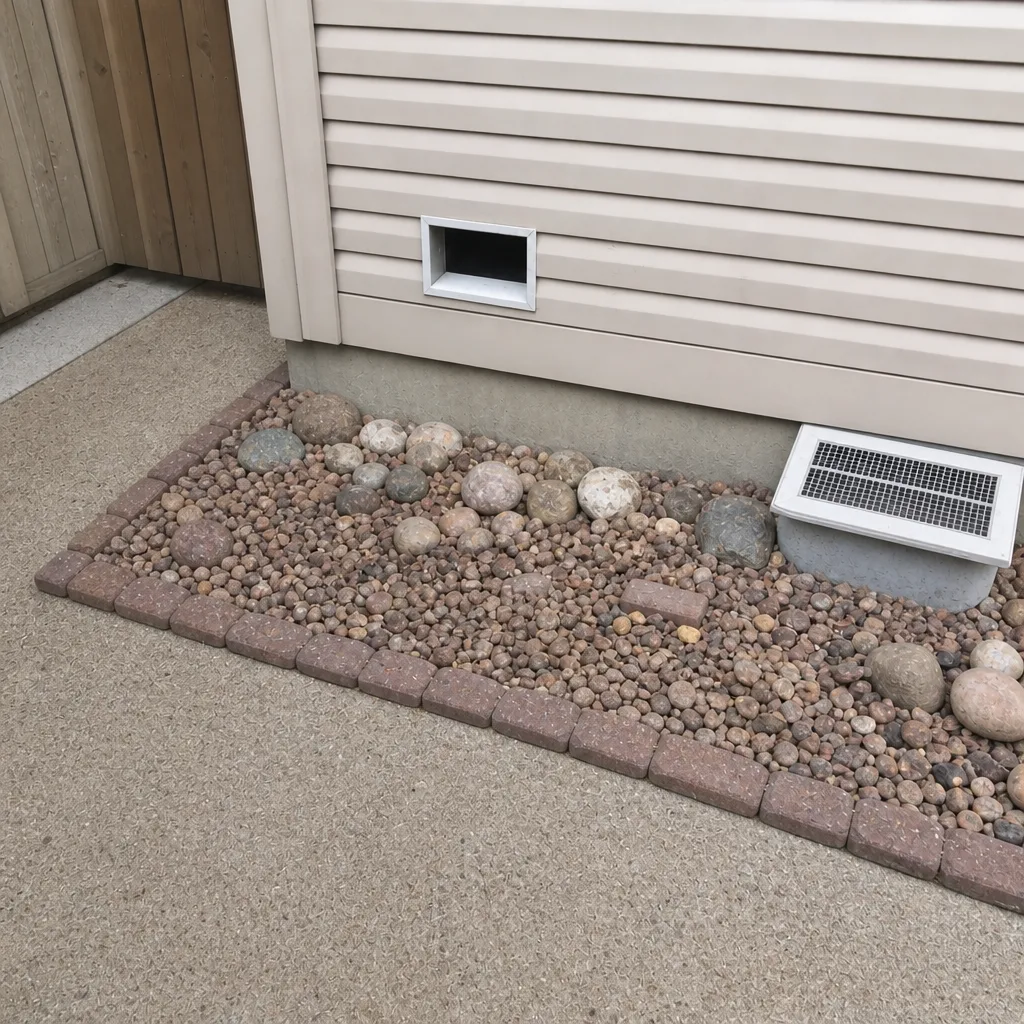 After
When to Call a Professional
Some duct situations clearly call for a professional. If you’ve noticed visible dust or debris at the registers, a musty smell when the system starts, or dust that settles faster indoors than out, it’s worth an evaluation. The same goes for recent renovation, a nearby wildfire smoke event, or any sign of pest activity in the system. A professional inspection also matters when you notice uneven airflow room to room, which can point to disconnected or crushed duct runs, or when you’re managing an existing Honeywell or Aprilaire IAQ setup and don’t want it disturbed. Flagship Air Duct Cleaning offers free estimates in Colorado Springs. Call (866) 293-3740. We answer 24/7. Fast dispatch from 7am to 7pm, Sunday through Friday.
Frequently Asked Questions
It typically falls into a per-system range set by a written estimate, with larger or heavily-soiled systems costing more. We give one flat price per system agreed before work starts, never per-vent pricing. Call (866) 293-3740 for an exact quote; estimates are free.
Cheaper quotes are usually for a visual inspection with a vacuum wand near the registers, not a whole-system cleaning. The price is real; the cleaning isn’t. Ask what equipment they use and whether they use negative-pressure containment. Call (866) 293-3740 for a quote on a real cleaning.
You should get before-and-after photos of your own ducts, plus a clear explanation of what was cleaned and any repairs made. We document every job that way. Call (866) 293-3740 to book an evaluation.
More often than in mild climates, because pine pollen, wildfire ash, and clay dust load the system faster here. Watch for signals like dust returning at grilles or a musty smell, rather than following a fixed calendar. Call (866) 293-3740 for an inspection.
Yes. Thinner air at 6,035 feet means the blower moves less air mass and runs longer, pulling more particulate into the return side each day. That’s why duct buildup here can look different from sea-level homes. Call (866) 293-3740 to have your system evaluated.
Yes. We clean it, and if we find damage, we fix it in the same visit, whether it’s a disconnected joint, a crushed section, or a gap at a seam. Call (866) 293-3740 to schedule.
The Bottom Line
Air duct cleaning in Colorado Springs isn’t a generic service. Altitude, wildfire smoke, pine pollen, and Palmer Divide clay dust create duct conditions that demand real diagnosis and professional equipment. The essentials: whole-system cleaning with containment, one flat price per system in writing, before-and-after photos of your own ducts, and an inspection for damage that gets repaired in the same visit. If a quote is per-vent or built on a coupon, ask what’s actually included. We use professional-grade systems from Rotobrush and Nikro, we repair what we find, and we work alongside your existing IAQ components rather than around them, built to a Flagship standard.
Call (866) 293-3740 for a free estimate. We answer 24/7. Fast dispatch from 7am to 7pm, Sunday through Friday.
Written by the team at Flagship Air Duct Cleaning.